

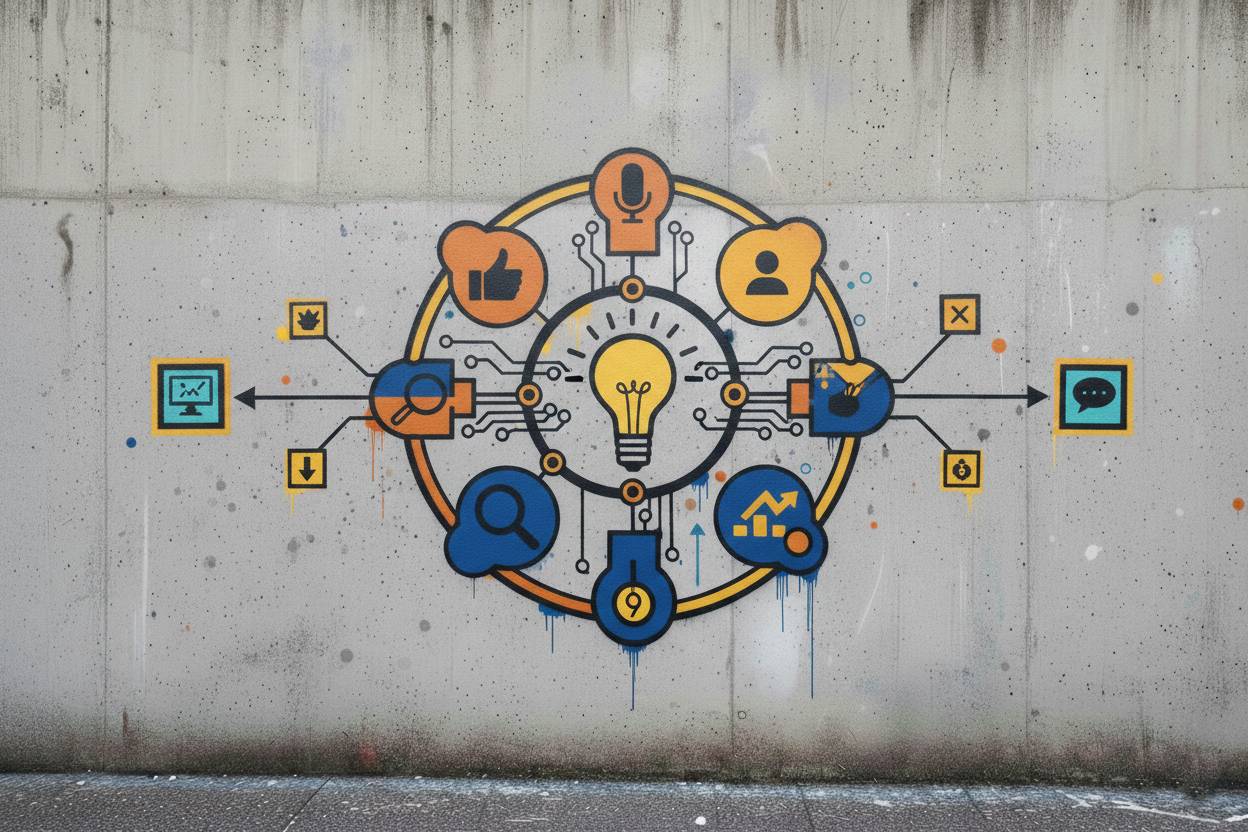
Artificial Intelligence is transforming how content is produced, making the process faster, more efficient, and accessible to everyone. From blog posts to social media updates, AI tools now assist writers, marketers, and businesses in generating high-quality content in minutes. According to a 2025 report by Gartner, over 70% of marketing teams use AI to streamline content creation, reducing production time by up to 40%. This shift is not just about speed—it’s about enabling creators to focus on strategy and creativity while AI handles repetitive tasks.
AI-powered platforms like Jasper, Copy.ai, and Writesonic leverage natural language processing to draft articles, product descriptions, and even video scripts. These tools analyze vast datasets to suggest relevant topics, optimize for SEO, and ensure grammatical accuracy. The result is a significant reduction in the time and effort required to produce engaging content. For freelancers and agencies, this means meeting tight deadlines without sacrificing quality.
Understanding AI Content Generators AI content generators use machine learning algorithms to understand context, tone, and audience preferences. They can produce drafts based on simple prompts, allowing creators to refine rather than start from scratch. This technology is particularly useful for generating ideas, overcoming writer’s block, and maintaining a consistent publishing schedule.
The Role of AI in SEO Optimization AI doesn’t just write—it optimizes. Tools like SurferSEO and Clearscope analyze top-performing content and suggest keywords, headings, and structure to improve search rankings. By integrating AI into the content workflow, creators can ensure their work is both reader-friendly and search-engine optimized, driving more organic traffic.
AI-Powered Research and Data Analysis
One of the most time-consuming aspects of content creation is research. AI tools can sift through millions of sources to extract relevant data, statistics, and trends in seconds. For example, platforms like Frase and MarketMuse use AI to identify content gaps and recommend topics that resonate with target audiences. This capability allows creators to build authoritative, data-driven content without spending hours on manual research.
AI also helps in fact-checking and verifying sources, reducing the risk of inaccuracies. With the ability to process and summarize complex information, AI enables writers to include up-to-date statistics and insights, enhancing the credibility of their work.
Automated Data Collection and Summarization AI-powered research assistants can scan academic papers, industry reports, and news articles to provide concise summaries. This feature is invaluable for creating in-depth guides, whitepapers, and thought leadership pieces. Creators can focus on analysis and storytelling, while AI handles the heavy lifting of data collection.
Real-Time Trend Analysis AI tools monitor social media, forums, and search trends to identify emerging topics. By leveraging real-time data, content creators can produce timely, relevant content that captures audience interest. This proactive approach ensures that content remains fresh and engaging, even in fast-moving industries.
Enhancing Creativity with AI Assistants
Contrary to popular belief, AI doesn’t stifle creativity—it enhances it. AI assistants can generate multiple content variations, suggest creative angles, and even help brainstorm headlines. For instance, a study by MIT found that writers using AI tools produced 50% more creative ideas compared to those working without assistance. These tools act as collaborative partners, offering inspiration and new perspectives.
AI can also analyze audience engagement data to recommend content formats and styles that perform best. Whether it’s a listicle, how-to guide, or infographic, AI helps tailor content to audience preferences, increasing engagement and shareability.
Overcoming Writer’s Block AI prompts and idea generators help writers break through creative blocks by providing fresh angles and unique approaches. Tools like Rytr and Anyword offer suggestions based on trending topics and user input, making it easier to start and sustain the writing process.
Personalizing Content at Scale AI enables hyper-personalization by analyzing user behavior and preferences. Content can be dynamically adjusted to suit different audience segments, improving relevance and impact. This level of customization was once time-prohibitive, but AI makes it achievable for businesses of all sizes.
Streamlining Editing and Proofreading
Editing is a critical yet time-intensive part of content creation. AI-powered editors like Grammarly and Hemingway Editor check for grammar, clarity, and readability, ensuring polished final drafts. These tools go beyond basic spell-check, offering style suggestions and tone adjustments to match brand voice.
Advanced AI editors can also detect plagiarism, ensuring originality and compliance with copyright standards. By automating the editing process, creators can publish error-free content faster and maintain professional standards.
Consistency in Brand Voice AI tools can be trained to recognize and replicate a brand’s unique voice and style. This consistency is crucial for building brand identity and trust with audiences. Whether it’s a blog post or a social media caption, AI ensures every piece of content aligns with the brand’s messaging.
Multilingual Content Creation AI translation and localization tools break language barriers, enabling creators to reach global audiences. Platforms like DeepL and Smartling use AI to adapt content culturally and linguistically, ensuring it resonates with diverse markets without the need for extensive manual translation.
Automating Social Media Content
Social media demands constant content updates, which can be overwhelming for creators. AI tools like Hootsuite and Buffer use algorithms to schedule posts, suggest optimal publishing times, and even generate captions. This automation allows marketers to maintain an active online presence without being glued to their screens.
AI can also analyze engagement metrics to recommend content adjustments, such as hashtags, visuals, and posting frequency. By leveraging these insights, brands can maximize their social media impact with minimal effort.
Visual Content Generation AI isn’t limited to text—it can create images, videos, and graphics. Tools like Canva’s Magic Design and DALL·E generate visuals based on text prompts, making it easy to produce eye-catching content. This integration of text and visual AI streamlines the entire content creation process.
Chatbots and Interactive Content AI-driven chatbots and interactive content tools engage audiences in real time. From quizzes to personalized recommendations, these features enhance user experience and keep audiences coming back for more. Brands using AI chatbots report a 30% increase in user engagement and satisfaction.
AI in Video and Audio Content Production
Video and audio content are increasingly popular, but production can be resource-intensive. AI tools like Descript and Synthesia simplify video editing, voiceovers, and even avatar-based presentations. These platforms use AI to edit footage, transcribe audio, and generate subtitles, significantly reducing production time.
AI voice generators, such as Murf and Lovo, create natural-sounding narration without the need for professional voice actors. This accessibility allows creators to produce high-quality audio and video content on a budget.
Automated Video Editing AI-powered video editors analyze raw footage to suggest cuts, transitions, and effects. This automation speeds up the editing process and helps creators produce professional-quality videos faster. Platforms like Magisto and InVideo use AI to transform scripts into polished videos in minutes.
Podcast and Audiobook Creation AI tools can convert text to speech, edit audio files, and even enhance sound quality. For podcasters and audiobook creators, this means faster turnaround times and lower production costs, making audio content more accessible to independent creators.
The Impact of AI on Content Marketing Strategies
AI is reshaping content marketing by enabling data-driven decision-making. Marketers can use AI to predict content performance, identify high-value topics, and optimize distribution channels. According to HubSpot, businesses using AI in their content strategy see a 35% increase in lead generation and a 25% boost in conversion rates.
AI also helps in repurposing content across multiple platforms. A single blog post can be transformed into social media snippets, infographics, and email newsletters, maximizing reach and ROI.
Predictive Content Analytics AI analytics tools forecast which content will perform best, allowing marketers to allocate resources effectively. By understanding audience preferences, brands can create targeted campaigns that drive results.
Dynamic Content Delivery AI enables dynamic content delivery, where users receive personalized recommendations based on their behavior. This approach increases engagement and conversion rates, as content is tailored to individual needs and interests.
Ethical Considerations and Best Practices
While AI offers numerous benefits, ethical considerations are paramount. Creators must ensure transparency, avoid misinformation, and respect copyright laws. AI-generated content should be clearly labeled, and human oversight is essential to maintain authenticity and trust.
It’s also important to use AI responsibly, avoiding bias and ensuring diversity in content. AI models are only as good as the data they’re trained on, so creators should regularly audit AI outputs for accuracy and fairness.
Avoiding Over-Reliance on AI AI should augment, not replace, human creativity. Over-reliance on AI can lead to generic or impersonal content. The best results come from a balance between AI efficiency and human insight.
Maintaining Authenticity Audience trust is built on authenticity. AI-generated content should be reviewed and refined by humans to ensure it reflects genuine brand values and connects emotionally with readers.
Case Study: How a Startup Scaled Content Production with AI
TechStart, a SaaS startup, struggled to maintain a consistent blog and social media presence due to limited resources. By integrating AI tools like Jasper for writing and Canva for visuals, they reduced content production time by 60%. Within six months, their organic traffic increased by 200%, and engagement rates doubled. The AI tools allowed their small team to focus on strategy and community building, leading to rapid growth.
The startup also used AI analytics to identify trending topics, resulting in several viral posts. Their success demonstrates how AI can level the playing field, enabling small businesses to compete with larger brands.
Common Mistakes to Avoid When Using AI for Content Creation
Ignoring SEO Best Practices AI can generate content quickly, but it’s not always optimized for search engines. Creators should manually review AI suggestions and incorporate relevant keywords, meta descriptions, and internal links.
Neglecting Human Review AI is powerful, but it’s not infallible. Skipping human review can lead to errors, awkward phrasing, or off-brand messaging. Always edit and fact-check AI-generated content before publishing.
Overlooking Audience Feedback AI can analyze data, but it can’t replace direct audience interaction. Regularly solicit feedback and adjust content strategies based on real user insights.
Using AI Without Clear Goals AI tools are most effective when aligned with specific content goals. Define objectives—whether it’s brand awareness, lead generation, or thought leadership—and tailor AI use accordingly.
Statistics
- AI Adoption in Marketing: 70% of marketing teams use AI for content creation, reducing production time by up to 40% (Gartner, 2025).
- Creative Output: Writers using AI tools produce 50% more creative ideas than those working without assistance (MIT, 2024).
- Lead Generation: Businesses using AI in content strategy see a 35% increase in lead generation (HubSpot, 2025).
- Engagement Boost: Brands using AI chatbots report a 30% increase in user engagement (Forrester, 2025).
- Content Repurposing: AI enables a 50% faster content repurposing process, maximizing ROI (Content Marketing Institute, 2025).
- Video Production: AI tools reduce video editing time by up to 70% (Adobe, 2025).
- Multilingual Reach: AI translation tools help businesses reach 40% more global audiences (Common Sense Advisory, 2025).
FAQs
How does AI help in content creation? AI assists in drafting, editing, researching, and optimizing content, making the process faster and more efficient. It can generate ideas, suggest improvements, and even create visuals, allowing creators to focus on strategy and creativity.
Can AI replace human writers? No, AI is a tool to augment human creativity, not replace it. The best content combines AI efficiency with human insight, emotion, and originality.
Is AI-generated content SEO-friendly? AI can optimize content for SEO, but human review is essential to ensure relevance, accuracy, and alignment with search intent.
What are the best AI tools for content creation? Popular tools include Jasper, Copy.ai, Grammarly, SurferSEO, Canva, and Descript. The best tool depends on your specific needs, such as writing, editing, or visual content.
How can I ensure my AI-generated content is original? Use plagiarism checkers, fact-check AI outputs, and add your unique perspective to maintain originality and authenticity.
What are the ethical concerns with AI content creation? Key concerns include transparency, bias, copyright, and authenticity. Always disclose AI use, review content for accuracy, and ensure it aligns with ethical standards.
Can AI help with content personalization? Yes, AI analyzes user data to tailor content to individual preferences, improving engagement and conversion rates.
Conclusion
AI is revolutionizing content creation, offering unparalleled speed, efficiency, and creativity. By leveraging AI tools, creators can produce high-quality content faster, reach wider audiences, and focus on strategic growth. However, success lies in balancing AI capabilities with human oversight, ensuring content remains authentic, engaging, and aligned with audience needs. As AI continues to evolve, its role in content creation will only expand, making it an indispensable asset for modern creators and marketers.ises continued evolution rather than revolution, with incremental improvements building on current foundations. Marketers who embrace these technologies while maintaining focus on customer needs and ethical considerations will be best positioned to thrive in the evolving landscape. The journey toward AI-enhanced marketing is just beginning, and the organizations starting now will be best prepared for the opportunities ahead.ology advances, AI-driven personalization will define competitive marketing leadership.
