

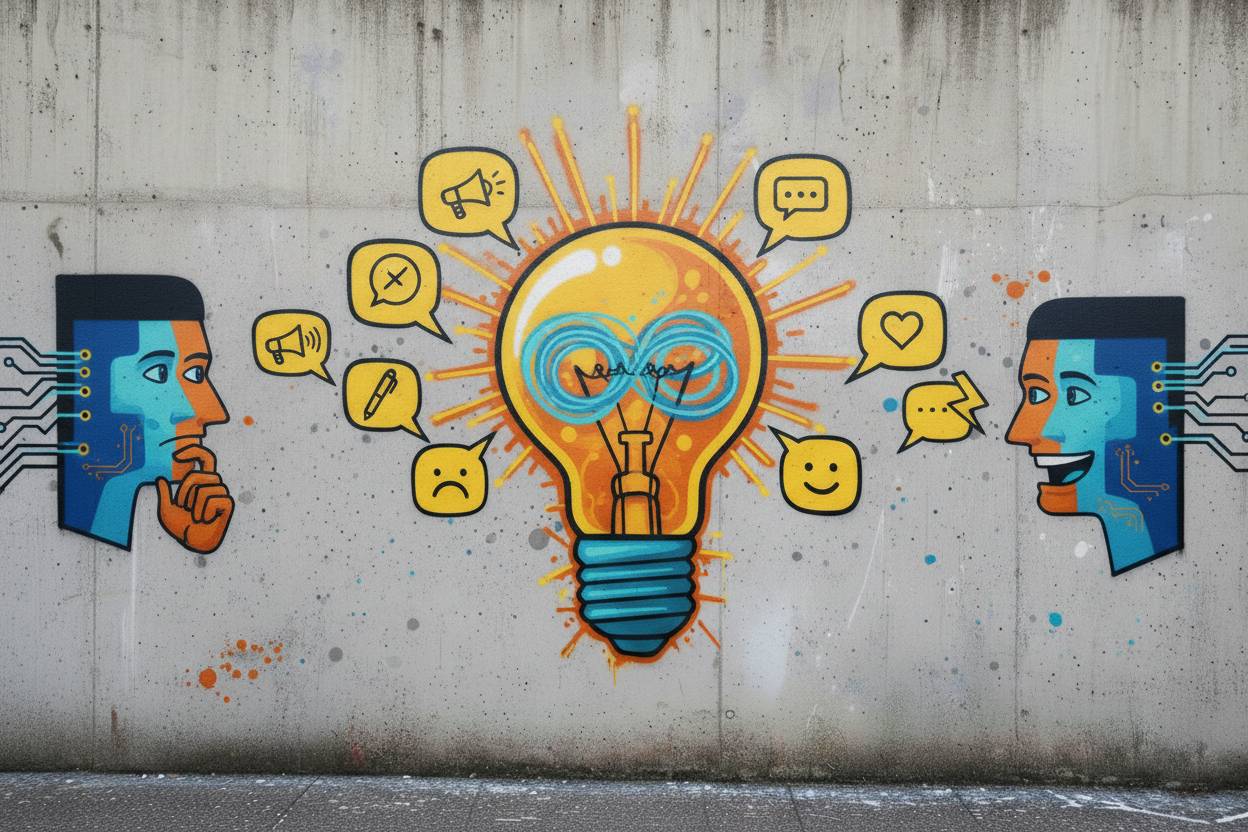
In an era dominated by rapid-fire digital consumption, a brand’s visual identity serves as its silent ambassador. It is the immediate visual shorthand that communicates values, professionalism, and personality before a single word is read. A cohesive identity ensures that a company remains recognizable across fragmented platforms, from mobile apps to physical packaging. By blending psychology with design, businesses can transcend mere aesthetics to build lasting emotional equity.
The Strategic Power of a Defined Color Palette
Color is far more than a decorative choice; it is a psychological trigger that influences consumer behavior and brand perception instantly. A strong visual identity utilizes a specific spectrum to evoke desired emotions, such as trust with deep blues or energy with vibrant oranges. Consistency in these hues across all touchpoints prevents brand dilution and strengthens cognitive association. When executed correctly, color becomes an identifier so powerful that the brand is recognizable even without its logo.
Emotional Resonance The choice of primary and secondary colors must align with the brand’s core mission to create an intuitive connection with the target audience.
Cross-Platform Uniformity Digital and print mediums render colors differently, requiring precise technical specifications like HEX, RGB, and CMYK codes to maintain integrity everywhere.
Typography as a Voice Without Sound
Typography functions as the “body language” of written content, providing a distinct tone that complements the brand’s message. A tech company might opt for clean, sans-serif fonts to signal innovation, while a law firm might prefer serifs to convey tradition and authority. The hierarchy of fonts ensures that information is digestible, guiding the reader’s eye through the most important parts of the story. Well-chosen typefaces improve readability and reinforce the brand’s unique character.
Typeface Personality Every font family carries a distinct “vibe,” meaning the selection process must be rooted in the brand’s specific persona rather than current trends.
Legibility and Accessibility Visual identity must prioritize the user experience by ensuring that fonts remain clear and readable across various screen sizes and lighting conditions.
The Iconography of a Memorable Logo
A logo serves as the anchor of a brand’s visual identity, distilled into a singular, impactful mark that represents the entire organization. It must be versatile enough to work on a tiny favicon as well as a massive billboard without losing its essential meaning. Simplicity is often the hallmark of the most enduring logos, as they are easier for the human brain to process and remember. A truly great logo bridges the gap between the company’s heritage and its future aspirations.
Scalable Geometry Modern logos are built on mathematical grids to ensure they retain their proportions and clarity regardless of how much they are scaled.
Symbolic Minimalism By stripping away unnecessary complexity, a logo can communicate a complex brand story through a few well-placed lines or shapes.
Imagery and Art Direction Standards
Consistent imagery creates a window into the brand’s world, establishing a lifestyle or aesthetic that the audience can aspire to join. Whether using high-contrast photography or minimalist illustrations, the “look and feel” should remain uniform to build a predictable and comforting brand environment. This involves setting specific guidelines for lighting, composition, and even the types of subjects featured in brand visuals. High-quality, intentional imagery separates professional brands from those that rely on generic, uninspired stock assets.
Visual Storytelling The style of photography or illustration should narrate the brand’s journey, making the abstract values of the company feel tangible and real.
Authenticity Over Gloss Modern consumers gravitate toward imagery that feels “human” and relatable rather than overly staged or artificially perfect corporate photography.
Statistics
- 92.6% of people say that visual dimension is the top influential factor affecting their purchase decision.
- Brand recognition can be increased by up to 80% through the consistent use of a signature color.
- It takes consumers only 0.05 seconds to form an opinion about a website’s visual aesthetic.
- 48% of consumers claim that the first thing that makes them loyal to a brand is its initial visual impact.
- Consistent brand presentation across all platforms can increase revenue by an average of 23%.
- 60% of consumers will avoid a brand if they find its logo or visual design unattractive or “cheap” looking.
- Over 70% of top brands utilize “cool” colors (blue and white) to establish a sense of digital security and IT proficiency.
The Role of Negative Space in Modern Design
Negative space, often referred to as white space, is the “breathing room” around design elements that prevents visual clutter. In professional IT and computer science branding, the use of space signifies sophistication and a focus on clarity over noise. It allows the most important elements, like calls to action or key product features, to stand out without competing for attention. Mastering the balance between content and emptiness is a hallmark of high-level professional design.
Cognitive Load Reduction By limiting the amount of information presented at once, negative space helps users process data more efficiently without feeling overwhelmed.
Directional Flow Strategic use of empty space acts as an invisible guide, leading the user’s eye toward the most critical information on a page or interface.
Layout and Grids in Digital Environments
In the realm of computer science and web development, the underlying grid system is what provides a sense of structural integrity to a brand. A strong visual identity includes a layout philosophy that ensures content is organized logically and aesthetically across all digital devices. This technical framework allows for “responsive design,” where the brand identity adapts seamlessly to different aspect ratios. A disciplined layout reinforces the perception that a company is organized, detail-oriented, and technologically capable.
Structural Consistency A repeatable grid system ensures that every new page or marketing asset feels like it belongs to the same family, regardless of the creator.
Modular Flexibility Modern layouts must be modular, allowing blocks of content to be rearranged for different platforms without breaking the visual narrative.
Case Study: The Rebranding of Slack
When the communication platform Slack updated its visual identity, it faced the challenge of a logo that was technically difficult to use. Their original “octothorpe” logo utilized 11 different colors, which often looked muddy when placed on different backgrounds or tilted at the wrong angle. The solution was a streamlined palette and a more geometric, four-color mark that retained the “DNA” of the original while improving legibility. This transition resulted in a 10% increase in brand sentiment scores and solved all technical rendering issues across their mobile and desktop applications.
Motion Graphics and Interactive Elements
In the digital-first world, a visual identity is no longer static; it moves, reacts, and interacts with the user. Motion branding defines how a logo animates when an app loads or how a menu slides out, adding a layer of “feel” to the visual experience. Smooth, purposeful animations can make a software product feel faster and more intuitive, reinforcing a brand’s reputation for high-quality engineering. These micro-interactions are the “digital finish” that separates premium brands from the competition.
Kinetic Identity Defining how a brand moves ensures that even its transitions and animations communicate the same energy as its static logo.
User Feedback Loops Interactive visuals provide immediate confirmation to users, making the digital experience feel responsive and “alive.”
Common Mistakes in Visual Identity
- Lack of Documentation: Failing to create a “Brand Bible” or Style Guide leads to inconsistent application by different departments.
- Over-complication: Designing a logo with too many fine details that disappear when shrunk down for a smartphone screen.
- Chasing Trends: Adopting “trendy” colors or fonts that look dated within a year, forcing an expensive and confusing rebrand.
- Ignoring Accessibility: Choosing color combinations or font sizes that are difficult for people with visual impairments to navigate.
Brand Evolution and Scalability
A robust visual identity is designed with the future in mind, allowing the brand to grow into new markets without needing a total overhaul. Scalability means the design elements work just as well for a sub-brand or a new product line as they do for the parent company. As technology changes, the identity must be flexible enough to incorporate new mediums like Augmented Reality (AR) or Virtual Reality (VR). A brand that cannot evolve visually often becomes a relic of the era in which it was founded.
Future-Proofing Designers must test visual elements against potential future use cases to ensure they don’t become a bottleneck for expansion.
Component Libraries Building a library of reusable visual components allows a brand to scale its digital presence rapidly while maintaining 100% visual fidelity.
Frequently Asked Questions
How often should a brand refresh its visual identity? Most healthy brands perform a minor “refresh” every 3 to 5 years to stay modern, while a major “rebrand” typically happens every 7 to 10 years or during a significant shift in business strategy.
Does a startup need a full visual identity immediately? Yes, because a professional appearance builds immediate trust with investors and early adopters, which is crucial for survival in the competitive IT landscape.
Can I use more than three colors in my brand palette? While it is possible, it is technically difficult to manage. Most successful brands use one primary color, one or two secondary colors, and a set of neutral tones to maintain clarity.
Conclusion
A strong brand visual identity is the synthesis of art, psychology, and technical precision. It is not merely about “looking good” but about creating a functional, scalable system that communicates a brand’s essence at a glance. By focusing on consistency, accessibility, and strategic storytelling, businesses can create a visual presence that resonates deeply with their audience. In the fast-paced world of technology and computer science, a clear visual identity is the ultimate tool for cutting through the noise and building a legacy of trust.
