

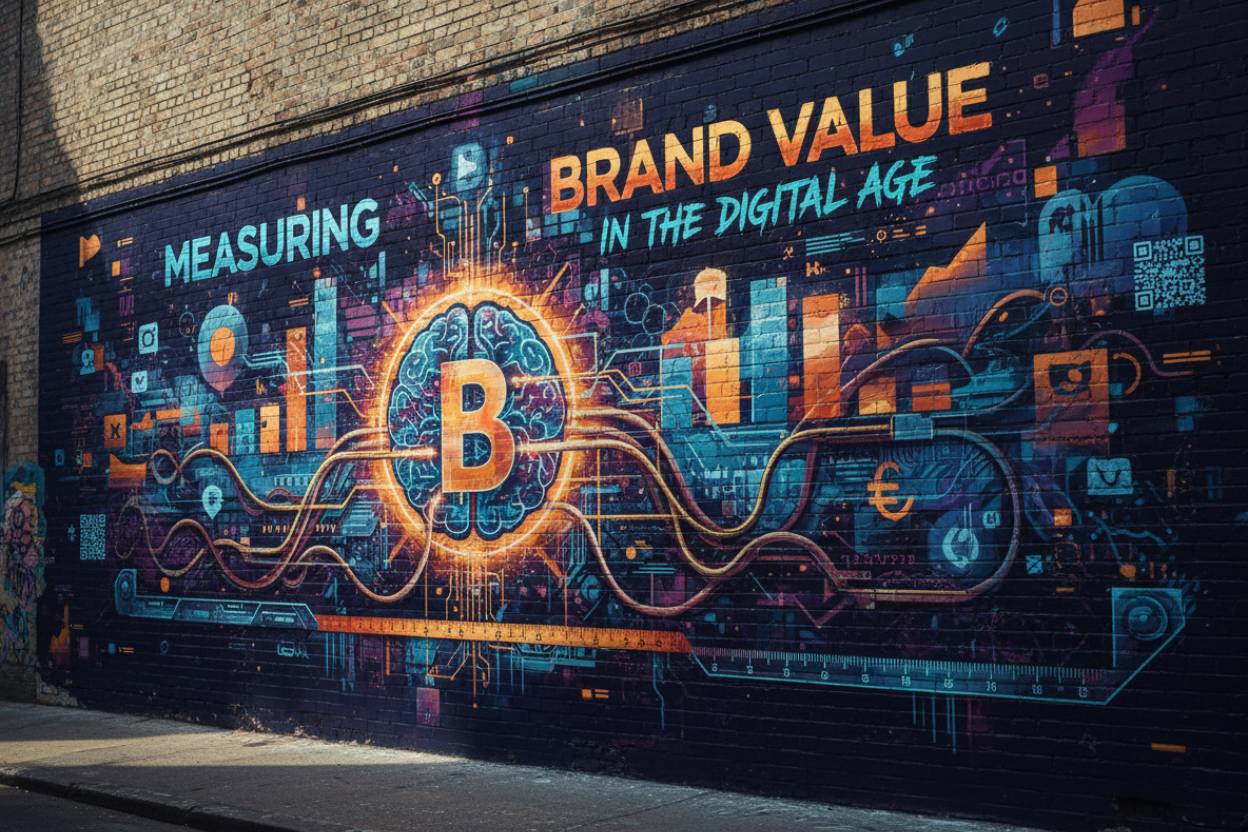
Brand value today goes far beyond visual identity or brand recognition. In the digital age, it reflects how users perceive, trust, and interact with a brand across multiple online touchpoints. Websites, apps, social media, and search results all contribute to shaping this perception. Digital brand value is dynamic, measurable, and closely tied to user experience and data. Companies that understand this shift can better align branding with performance. Measuring brand value now requires both qualitative insight and quantitative metrics.
Emotional Perception and Trust
Brand value is strongly influenced by how users feel about a brand and how much they trust it. Emotional connection often drives long-term loyalty more than price or features.
- Brand sentiment analysis from reviews and social media
- Net Promoter Score (NPS) as a trust indicator
- Consistency of tone and messaging across platforms
Functional and Experiential Value
Beyond emotion, users evaluate brands based on usability and reliability. Digital experiences directly affect perceived brand quality.
- Website speed and performance
- App usability and design clarity
- Customer support responsiveness
The Role of Data in Brand Valuation
Data has become the backbone of modern brand measurement. Digital platforms provide continuous feedback loops through analytics tools. This data allows brands to measure awareness, engagement, and conversion in real time. Unlike traditional branding, digital brand value can be tracked daily. Data-driven branding reduces guesswork and improves strategic decisions. Brands that leverage data effectively gain a competitive edge.
Behavioral Analytics
User behavior reveals how audiences truly interact with a brand, not just what they say.
- Session duration and bounce rates
- Repeat visits and retention metrics
- Click-through and conversion paths
Audience Segmentation
Different audience segments perceive brand value differently. Segment-based analysis improves accuracy.
- Demographic and geographic segmentation
- Device and platform behavior differences
- Customer lifecycle stages
Digital Channels as Brand Value Multipliers
Each digital channel contributes uniquely to brand value. Search engines influence credibility, social media shapes personality, and content platforms build authority. A strong brand maintains coherence across all channels. Inconsistencies can dilute brand value quickly. Omnichannel alignment is now a core branding requirement. Brands that integrate channels effectively amplify their perceived value.
Search Presence and Authority
Search visibility strongly affects trust and legitimacy.
- Brand-related search volume
- Click dominance for branded keywords
- SERP reputation and reviews
Social Media Impact
Social platforms humanize brands and enable direct interaction.
- Engagement rate over follower count
- Community interaction quality
- Brand voice consistency
Technology and AI in Brand Measurement
Artificial intelligence has transformed how brand value is analyzed. AI tools can process massive datasets faster and more accurately than manual methods. Machine learning models detect sentiment, predict trends, and identify brand risks early. This enables proactive brand management. AI-driven insights help brands adapt quickly to market changes.
Sentiment Analysis at Scale
AI can analyze thousands of comments and reviews instantly.
- Positive vs negative sentiment trends
- Topic-based sentiment classification
- Crisis detection signals
Predictive Brand Insights
Advanced models forecast how brand value may change.
- Predicting churn based on sentiment shifts
- Identifying emerging brand advocates
- Anticipating reputation risks
Financial Metrics Linked to Brand Value
Brand value is not only perceptual; it has direct financial implications. Strong brands often command higher prices and lower acquisition costs. Digital metrics help connect branding efforts to revenue impact. This connection is critical for executives and investors. Measuring financial influence validates branding investments.
Revenue and Pricing Power
Brands with high digital trust often outperform competitors financially.
- Ability to charge premium prices
- Higher conversion rates
- Stronger lifetime customer value
Marketing Efficiency
Brand strength reduces dependency on paid media.
- Lower cost per acquisition
- Higher organic traffic share
- Better campaign performance
Case Study: Measuring Brand Value in a SaaS Company
A mid-sized SaaS company sought to understand why growth had plateaued despite increased ad spend. By analyzing brand-related search trends, social sentiment, and user behavior, the company discovered declining trust due to slow support response times. They improved onboarding, optimized support workflows, and refined messaging. Within six months, branded search volume increased, churn dropped, and organic sign-ups rose significantly. This demonstrated how digital brand value directly impacts growth.
Key Actions Taken
The company focused on measurable improvements rather than vague branding efforts.
- Improved response time by 40%
- Updated knowledge base and UX
- Realigned brand messaging
Results Achieved
Clear metrics showed brand recovery and growth.
- Increased customer retention
- Higher NPS score
- Reduced ad dependency
Statistics
Accurate data highlights the importance of measuring brand value digitally.
- 81% of consumers say trust in a brand is a deciding factor in purchasing decisions
- Brands with consistent presentation across platforms see up to 23% revenue growth
- 90% of consumers read online reviews before interacting with a brand
- Improving customer experience can increase revenue by up to 15%
- Strong brands reduce customer acquisition costs by an average of 20%
- 70% of brand perception is influenced by digital touchpoints
- Companies using AI-driven brand analytics report faster decision-making by 33%
The Most Common Mistakes in Measuring Brand Value
Many organizations still apply outdated methods to modern branding. These mistakes lead to inaccurate conclusions and poor strategy. Digital brand value requires continuous measurement, not annual reports. Ignoring user experience data is another critical error. Brands must also avoid focusing on vanity metrics.
Over-Reliance on Followers and Impressions
High numbers do not always mean high value.
- Followers without engagement
- Impressions without conversions
- Traffic without retention
Ignoring Qualitative Signals
Numbers alone cannot capture full brand perception.
- User feedback and reviews
- Community discussions
- Customer support conversations
Frequently Asked Questions
How is brand value different from brand awareness?
Brand awareness measures visibility, while brand value measures perception, trust, and impact on behavior.
Can small businesses measure brand value effectively?
Yes, digital tools make brand measurement accessible regardless of company size.
How often should brand value be measured?
Continuous monitoring is ideal, with deeper analysis on a monthly or quarterly basis.
Does SEO directly affect brand value?
Yes, strong search presence increases credibility and trust.
Is brand value measurable in financial terms?
Indirectly yes, through revenue growth, retention, and marketing efficiency.
Conclusion
Measuring brand value in the digital age is no longer optional. It is a strategic necessity driven by data, technology, and user experience. Brands that combine emotional insight with analytical precision gain a clearer understanding of their market position. AI, analytics, and omnichannel measurement have redefined how brand value is built and sustained. Organizations that adapt and measure continuously will remain competitive and resilient in an ever-evolving digital landscape.
