

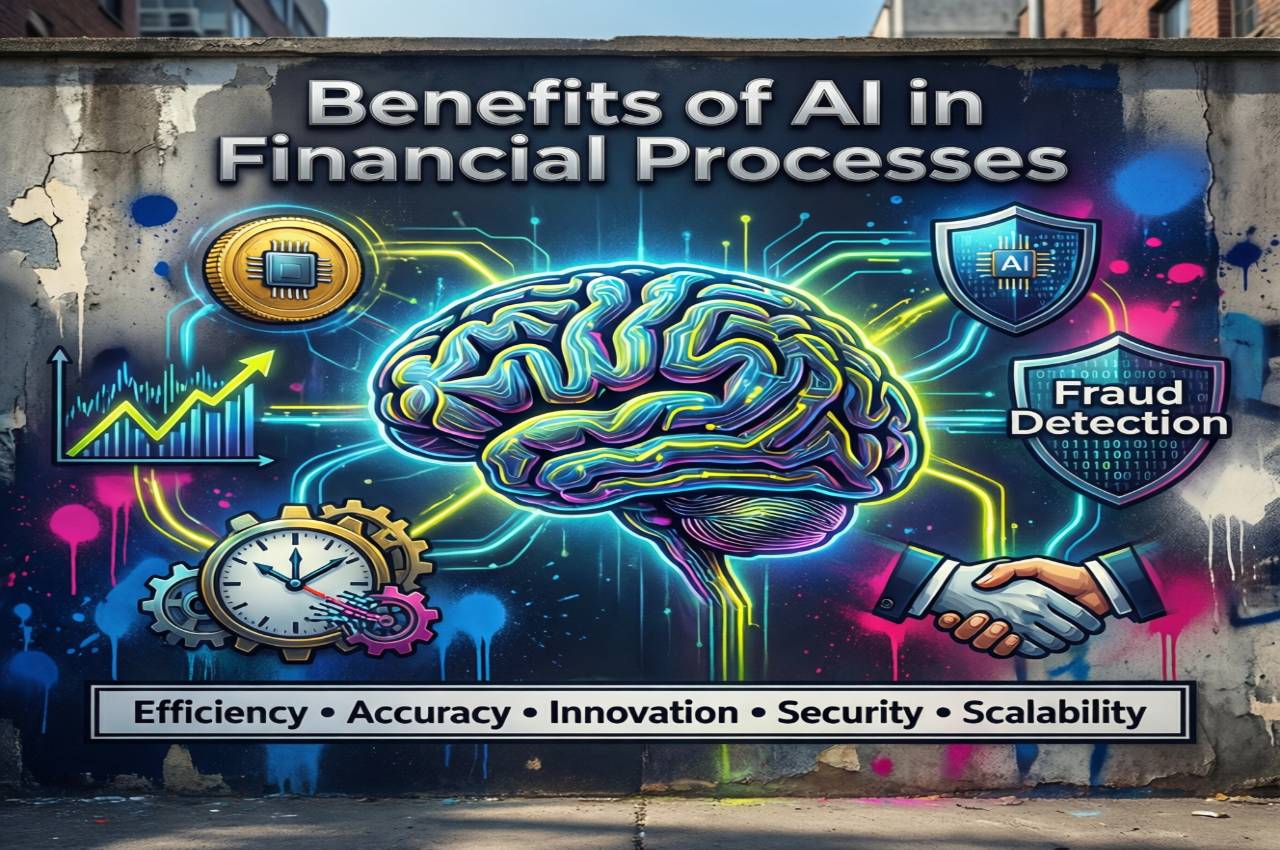
Artificial Intelligence (AI) is transforming the financial sector, increasing efficiency, accuracy, and strategic insight across accounting, auditing, risk management, and customer service. Finance professionals are now harnessing AI to automate repetitive tasks, reduce errors, and deliver real‑time insights that drive smarter decision‑making. This article explores how AI reshapes financial operations, illustrated with real‑world examples, statistics, and expert insights to empower organizations and professionals alike.
Enhanced Accuracy and Error Reduction
AI eliminates manual data entry errors through intelligent automation, ensuring financial data integrity. Machine learning models validate transactions and flag anomalies in seconds, far beyond human speed. Reducing errors directly impacts compliance and reporting quality. AI systems also continuously learn from new data to improve future accuracy. This creates a reliable backbone for financial operations, enabling teams to trust their numbers and forecasts.
Real‑Time Reconciliation
AI platforms automatically reconcile accounts by matching entries across ledgers and statements, trimming hours of manual work.
Predictive Correction
Advanced algorithms not only detect errors but suggest corrective actions, reducing time to resolution and improving audit trails.
Accelerated Financial Reporting
AI accelerates the generation of financial reports by analyzing datasets in real time. Traditional reporting cycles (days or weeks) are now compressed into hours. Automated natural language generation tools turn data into narratives for stakeholders. These capabilities help organizations respond swiftly to market changes. Financial teams can dedicate more time to analysis rather than data preparation.
Instant Consolidation
Systems unify multiple financial sources instantly, supporting global enterprises with complex structures.
Narrative Insights
AI generates human‑readable summaries from financial data, making results accessible to non‑technical stakeholders.
Improved Fraud Detection and Risk Management
AI detects patterns that suggest fraud by constantly monitoring transactions against sophisticated risk profiles. Systems learn evolving fraud tactics, adapting without explicit reprogramming. AI enhances risk scoring models, enabling pre‑emptive action before losses occur. For financial institutions, this translates to millions saved in avoided fraud. Trust in financial systems rises as AI strengthens defenses.
Anomaly Detection Engines
These systems use unsupervised learning to spot previously unseen fraudulent behaviors.
Adaptive Risk Models
Risk profiles evolve with incoming data, keeping institutions prepared for emerging threats.
Cost‑Effective Automation
AI reduces operational costs by automating routine financial tasks such as accounts payable, receivable, and payroll processing. Organizations report significant labor savings and redeploy staff toward higher‑value strategic work. Cloud‑based AI solutions also lower infrastructure overhead. As a result, financial departments become leaner and more productive. This shift supports scalability without proportional cost increases.
Invoice Automation
AI extracts information from invoices, matching them to purchase orders and approving payments automatically.
Payroll Intelligence
Automated systems calculate wages, benefits, and compliance with minimal human intervention.
Enhanced Decision‑Making with Predictive Analytics
Financial forecasting becomes more reliable with AI, using historical data and external indicators to project future trends. Firms gain foresight to adjust budgets, optimize investments, and balance portfolios. Predictive analytics fosters data‑driven strategic planning. Financial leaders gain competitive advantage through anticipatory insights. This approach empowers firms to act rather than react.
Cash Flow Forecasting
AI predicts cash inflows and outflows, helping firms maintain liquidity.
Market Trend Analysis
Algorithms evaluate economic signals to support investment strategies.
Personalized Financial Services
AI enables highly customized services for clients, such as tailored investment advice and smart budgeting. Chatbots and virtual assistants provide instant support to customers 24/7. Personal finance apps leverage AI to offer spending insights and savings recommendations. Enhanced personalization improves satisfaction and loyalty. Financial service providers differentiate themselves through intelligent user experiences.
Intelligent Chat Assistants
Clients receive quick answers about balances, transactions, and product options.
Custom Investment Portfolios
AI builds risk‑aligned portfolios based on individual preferences and goals.
Strengthened Compliance and Reporting Standards
Regulatory compliance becomes more manageable with AI monitoring changes in laws and automatically adjusting reporting. AI reduces the risk of sanctions and fines from non‑compliance. Real‑time rule enforcement keeps financial institutions aligned with regulatory expectations. Audit readiness improves with digital logs and traceable decision paths. Compliance teams gain confidence in governance frameworks.
Automated Policy Updates
Systems ingest regulatory changes and update internal controls accordingly.
RegTech Integration
AI integrates with regulatory technology tools to streamline compliance workflows.
Operational Scalability and Resilience
AI helps organizations handle growing transactional volumes with minimal additional staff. Systems scale effortlessly, maintaining performance during peak periods. This resilience enables financial institutions to support expansion without compromising quality. AI also aids in disaster recovery by maintaining continuity when human access is limited. Financial operations remain stable even in volatile environments.
Elastic Processing Platforms
Cloud‑based AI adjusts computational resources automatically to demand.
Continuity Assurance
AI supports backup protocols that preserve financial data integrity during outages.
Augmented Human Expertise
Rather than replacing finance professionals, AI augments their capabilities. Teams focus on interpretation, strategy, and stakeholder engagement while AI handles repetitive tasks. This synergy improves job satisfaction and professional growth. Financial leaders gain deeper insights faster. Organizations that blend human judgment with AI outperform peers in innovation and efficiency.
Decision Support Tools
AI provides scenario simulations to help experts evaluate choices.
Knowledge Amplification
Systems surface relevant data to inform human analysis, enhancing expertise.
Case Example: AI‑Driven Expense Management at a Global Firm
A multinational enterprise deployed AI to manage expense claims across 50,000 employees. Traditional processing took an average of five days per claim with high error rates. After implementing AI automation and receipt‑scanning technology, processing times fell to under 24 hours and error rates dropped by more than 80%. The finance team redirected efforts to strategic cost control initiatives, improving budget forecasting accuracy and employee satisfaction.
Statistics
• Businesses using AI in financial processes report up to 40% reduction in operational costs.
• AI‑driven fraud detection systems can cut fraud losses by up to 50%.
• 70% of financial institutions plan to increase AI investments over the next two years.
• Companies applying predictive analytics see 20% more accurate forecasts.
• Automated reconciliation can reduce closing cycles by up to 60%.
• AI‑powered chatbots handle up to 80% of routine customer inquiries in some banks.
• Organizations report 30% faster compliance reporting with AI tools.
Most Common Mistakes
Rushing into AI without a clear strategy can waste resources. Ignoring data quality undermines AI effectiveness. Overlooking employee training leads to resistance and low adoption. Failing to monitor AI performance can allow bias or drift in models. Choosing solutions without scalability can limit future growth.
Frequently Asked Questions
What financial tasks benefit most from AI?
Routine processes like reconciliation, reporting, and fraud detection see the greatest immediate gains.
Can small businesses afford AI tools?
Many scalable cloud‑based solutions make AI accessible to small and medium‑sized enterprises.
Does AI replace financial professionals?
AI automates tasks but enhances human judgment and strategic roles.
Is AI secure for financial data?
With proper governance and encryption, AI systems can meet stringent security standards.
How long before AI shows ROI in finance?
Organizations often see measurable gains within months of deployment.
Conclusion
AI’s integration into financial processes marks a pivotal leap toward efficiency, accuracy, and strategic insight. By automating routine tasks, enhancing risk controls, and enabling advanced analytics, AI empowers financial teams to operate at higher value and with greater agility. Success relies on thoughtful implementation, quality data, and alignment with organizational goals.
