

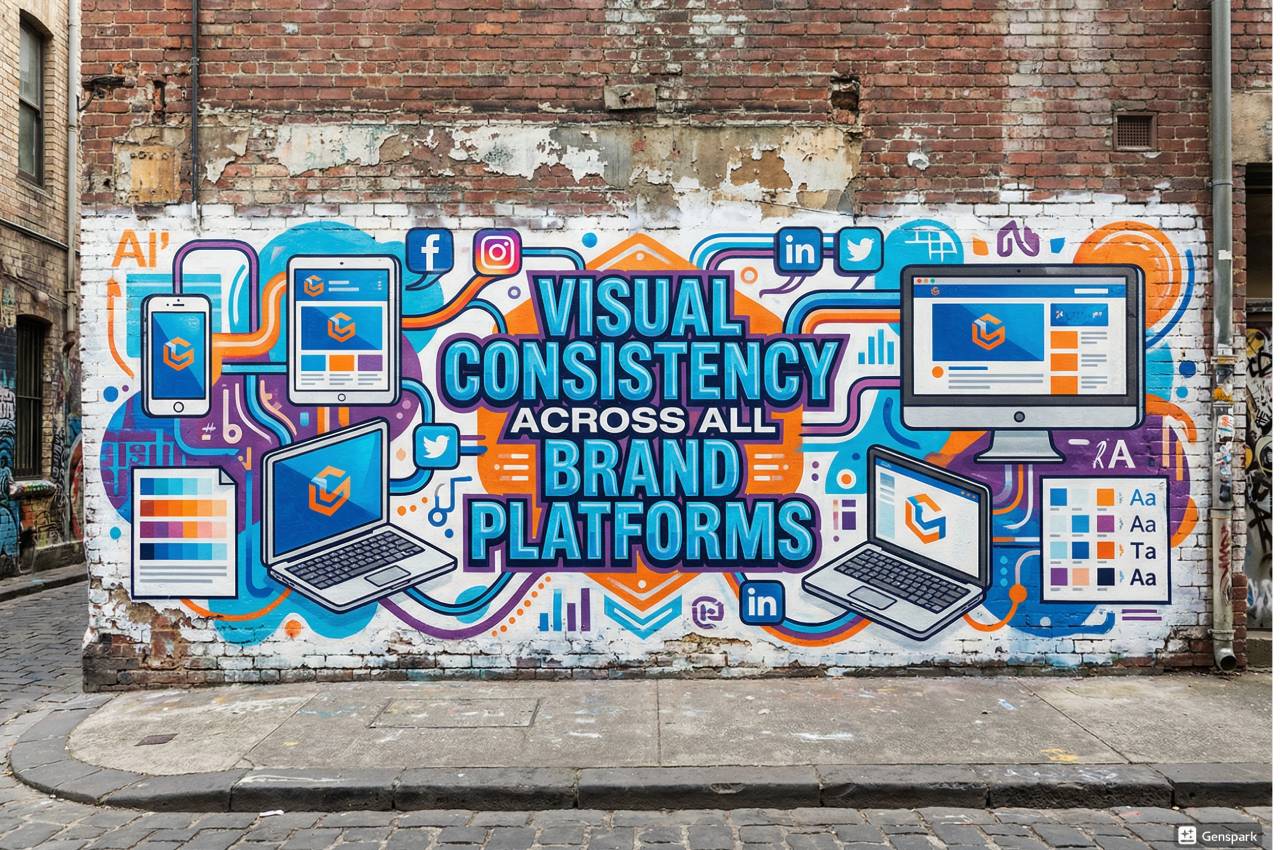
Visual consistency refers to maintaining the same visual language across all brand touchpoints, including websites, apps, social media, and digital products. It helps users instantly recognize a brand regardless of platform. In technology-driven environments, visual consistency becomes a trust signal. It reduces cognitive load and improves usability. For AI and IT-focused brands, consistency also reflects precision and reliability.
Brand Recognition
A consistent visual identity strengthens memory recall and makes the brand easier to identify across different digital environments.
User Trust
When visuals are predictable and aligned, users feel more confident interacting with the brand and its products.
Why Visual Consistency Matters for Technology Brands
Technology brands often operate in complex ecosystems involving software, AI tools, and data platforms. Visual consistency simplifies these complexities for users. It creates a unified experience across dashboards, interfaces, and communication channels. This alignment enhances perceived professionalism. It also supports long-term brand loyalty.
Professional Credibility
Consistent visuals signal maturity and seriousness, which are essential in IT and AI sectors.
Customer Retention
Users are more likely to return to platforms that feel familiar and coherent.
Core Elements of a Consistent Visual Identity
Visual consistency is built on several foundational elements that must remain aligned. These include color palettes, typography, iconography, and layout systems. Each element should be documented and standardized. Inconsistent use weakens the overall brand impression. Strong alignment creates a seamless experience.
Color Systems
Defined primary and secondary colors ensure uniformity across digital assets.
Typography Rules
Using the same fonts and hierarchy maintains readability and brand tone.
Visual Consistency Across Websites and Applications
Websites and applications are often the primary interaction points for users. Consistency between them reduces friction and learning curves. Design patterns should remain uniform across devices and operating systems. This approach improves accessibility and efficiency. It also supports scalable product development.
UI Components
Buttons, forms, and navigation elements should look and behave the same everywhere.
Responsive Behavior
Layouts should adapt consistently across desktop, tablet, and mobile screens.
Role of Design Systems in Maintaining Consistency
Design systems act as a single source of truth for visual and UI standards. They are especially valuable for AI and software companies with multiple teams. A design system speeds up development and reduces errors. It ensures that all products evolve visually in the same direction.
Reusable Components
Shared components help teams build faster without sacrificing consistency.
Cross-Team Alignment
Design systems align designers, developers, and product managers.
Visual Consistency in AI Products and Data Interfaces
AI platforms often present complex data and automated outputs. Consistent visuals help users interpret information accurately. Predictable layouts improve comprehension and reduce user anxiety. This is critical when users rely on AI-driven decisions.
Data Visualization Standards
Charts and graphs should follow consistent styles and color logic.
Explainability Support
Clear and consistent visuals make AI results easier to understand.
Case Study: Visual Consistency in a SaaS AI Platform
A mid-sized AI SaaS company unified its website, dashboard, and mobile app using a shared design system. Before the change, users reported confusion when switching platforms. After implementation, onboarding time decreased and user satisfaction improved. Support tickets related to UI confusion dropped significantly. The consistent visual language helped reinforce brand trust across all touchpoints.
Problem Identification
Disconnected visuals caused user frustration and reduced engagement.
Implementation Outcome
Unified design improved usability and brand perception.
Measuring the Impact of Visual Consistency
Visual consistency is not just aesthetic; it delivers measurable business value. Brands can track engagement, conversion rates, and user retention. Consistent experiences reduce errors and support costs. Over time, they contribute to stronger brand equity.
User Behavior Metrics
Time on site and task completion rates often improve.
Brand Performance Indicators
Consistency correlates with higher brand recall and loyalty.
Future Trends in Visual Consistency
As brands expand into AR, VR, and AI-driven interfaces, consistency becomes more challenging. Adaptive design systems and AI-assisted branding tools are emerging. These technologies help maintain alignment across new platforms. The future demands flexibility without losing identity.
AI-Assisted Design
AI tools can enforce brand rules automatically across assets.
Multi-Platform Expansion
Consistency will extend to immersive and conversational interfaces.
Statistics
- Consistent brand presentation increases revenue by up to 23% according to marketing analytics studies.
- 75% of users judge a company’s credibility based on visual design quality.
- Companies using design systems report up to 50% faster product development cycles.
- UI consistency can reduce user errors by nearly 30% in software products.
- 60% of users abandon digital products due to confusing or inconsistent interfaces.
- Brands with strong visual consistency see up to 3x higher brand recall rates.
- Support costs can drop by 20% after implementing unified UI standards.
Frequently Asked Questions
How does visual consistency affect user experience in AI tools?
It reduces confusion, improves understanding of outputs, and increases trust in automated decisions.
Is visual consistency only important for large companies?
No, startups benefit even more as consistency helps build early credibility.
Can visual consistency limit creativity?
When managed through flexible design systems, it actually supports scalable creativity.
How often should visual guidelines be updated?
They should evolve gradually, aligned with product and brand growth.
What teams are responsible for visual consistency?
Design, development, marketing, and product teams all share responsibility.
The Most Common Mistakes
Ignoring documentation and relying on individual preferences weakens consistency.
Using different color shades or fonts across platforms creates visual noise.
Failing to align marketing visuals with product UI causes brand disconnect.
Over-customizing interfaces without design system rules leads to fragmentation.
Not testing visuals across devices results in inconsistent experiences.
Conclusion
Visual consistency across all brand platforms is a strategic necessity, not a design luxury. For AI, IT, and computer science-driven brands, it reinforces trust, usability, and professionalism. Consistent visuals simplify complex systems and improve user confidence. With the right design systems and cross-team alignment, brands can scale without losing identity. In a competitive digital landscape, consistency is a key differentiator.
