

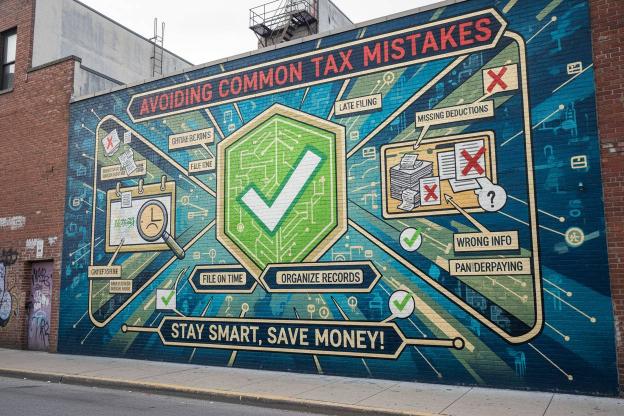
Tax mistakes can cost individuals and businesses significant money, time, and credibility. Even small errors may trigger audits, penalties, or delayed refunds. Many taxpayers underestimate how minor misreporting compounds over years. A professional approach to tax accuracy protects cash flow and long-term financial planning. Awareness is the first step toward prevention.
Financial Consequences
Incorrect filings often result in fines, interest, or lost deductions. Over time, these costs can exceed the original tax liability.
Legal Exposure
Repeated or severe mistakes may raise red flags with tax authorities. This increases the risk of audits and legal follow-ups.
Misclassifying Income Sources
One of the most frequent tax mistakes is reporting income under the wrong category. Freelance income, passive income, and employment wages are taxed differently. Digital platforms and global payments make classification more complex. Clear categorization ensures correct tax rates and deductions. Professionals always reconcile income sources before filing.
Employment vs. Self-Employment
Many creators and consultants wrongly report freelance income as salary. This leads to incorrect social tax calculations.
Domestic vs. Foreign Income
Global earnings must often be declared even if taxed abroad. Misclassification can cause compliance issues.
Overlooking Eligible Deductions
Taxpayers often miss deductions simply because they are unaware of them. Home office expenses, software subscriptions, and professional services are commonly overlooked. Strategic deduction planning reduces taxable income legally. Keeping detailed records throughout the year is essential. Professionals treat deductions as part of financial strategy, not an afterthought.
Business-Related Expenses
Operational costs directly tied to income generation are frequently underreported. Accurate tracking maximizes savings.
Education and Skill Development
Courses, certifications, and training related to work may qualify for deductions. Many taxpayers fail to claim them.
Poor Record-Keeping Practices
Disorganized documentation is a root cause of many tax errors. Missing invoices or unclear transaction histories weaken tax positions. Digital tools now make record-keeping easier than ever. Consistency is more important than complexity. Professionals rely on systems, not memory.
Manual Tracking Risks
Spreadsheets without validation often contain errors. Automation reduces human mistakes.
Document Retention
Keeping records for the legally required period is critical. Lost documents can invalidate claims.
Ignoring Tax Deadlines
Late filings and payments trigger automatic penalties in most tax systems. Even when no tax is owed, deadlines still apply. Many people miss deadlines due to poor planning, not intent. Proactive scheduling avoids unnecessary stress. Professionals treat tax calendars as non-negotiable.
Filing vs. Payment Deadlines
These are often different dates. Confusing them leads to penalties even after filing.
Extension Misunderstandings
Extensions usually delay filing, not payment. This misconception is very common.
Errors in Digital Tax Filing
Online tax systems reduce errors but do not eliminate them. Auto-filled data can still be wrong or incomplete. Blindly trusting software is a mistake. Human review remains essential. Professionals verify every auto-generated figure.
Auto-Populated Data
Imported data may miss adjustments or special cases. Manual checks are necessary.
Software Limitations
Not all platforms handle complex tax situations well. Advanced cases need expert review.
Underestimating Estimated Taxes
Self-employed individuals often fail to pay estimated taxes correctly. This leads to large year-end bills and penalties. Estimations should reflect real income trends. Professionals review estimates quarterly. This approach stabilizes cash flow.
Irregular Income Challenges
Variable earnings make estimation harder but more important. Conservative planning reduces risk.
Penalty Accumulation
Underpayment penalties add up silently over time. Early correction minimizes damage.
Case Study: Freelance SaaS Consultant
A freelance SaaS consultant earning from multiple platforms reported all income as salary. After an audit, tax authorities reclassified part of the income as self-employment. This resulted in back taxes and penalties. With professional guidance, the consultant restructured income reporting. Future filings became compliant and optimized.
Initial Mistake
Lack of understanding about income categories caused misreporting. No malicious intent was involved.
Corrective Action
Using accounting software and quarterly reviews solved the issue. Professional advice made the difference.
Professional Tax Planning Mindset
Avoiding tax mistakes is not about last-minute fixes. It requires year-round planning and awareness. Professionals integrate tax strategy into business decisions. This reduces surprises and improves compliance. Tax accuracy is a competitive advantage.
Proactive vs. Reactive
Planning ahead prevents errors better than fixing them later. Timing matters.
Continuous Learning
Tax rules evolve constantly. Staying informed is essential for accuracy.
Statistics
- Over 30% of individual tax penalties are caused by incorrect income reporting.
- Nearly 40% of self-employed taxpayers underpay estimated taxes annually.
- Around 25% of audits begin due to mismatched digital income data.
- Poor record-keeping contributes to over 20% of rejected deductions.
- Late filings account for approximately 15% of total tax penalties issued yearly.
- Automated tax software reduces calculation errors by about 60%, but not compliance errors.
- Small businesses lose billions annually due to unclaimed legitimate deductions.
Frequently Asked Questions
Can tax software fully prevent mistakes?
No. Software helps with calculations, but human review is essential for accuracy and compliance.
Are small mistakes really risky?
Yes. Repeated small errors can trigger audits and cumulative penalties.
Should freelancers always hire a tax professional?
Not always, but complex or growing income structures strongly benefit from professional guidance.
How long should tax records be kept?
Most tax authorities recommend keeping records for at least 5 to 7 years.
Do digital payments increase audit risk?
They increase traceability, not risk, but mismatches raise red flags.
The Most Common Mistakes
Misclassifying income types, ignoring estimated taxes, missing deductions, poor documentation, overreliance on software, misunderstanding extensions, and filing late are the most frequent errors seen by professionals.
Conclusion
Avoiding common tax mistakes requires awareness, structure, and a professional mindset. As income models become more digital and global, accuracy matters more than ever. Simple habits like proper classification, record-keeping, and timely reviews prevent costly outcomes. Tax compliance is not just a legal duty, but a financial strategy. Done right, it protects growth and peace of mind.
