

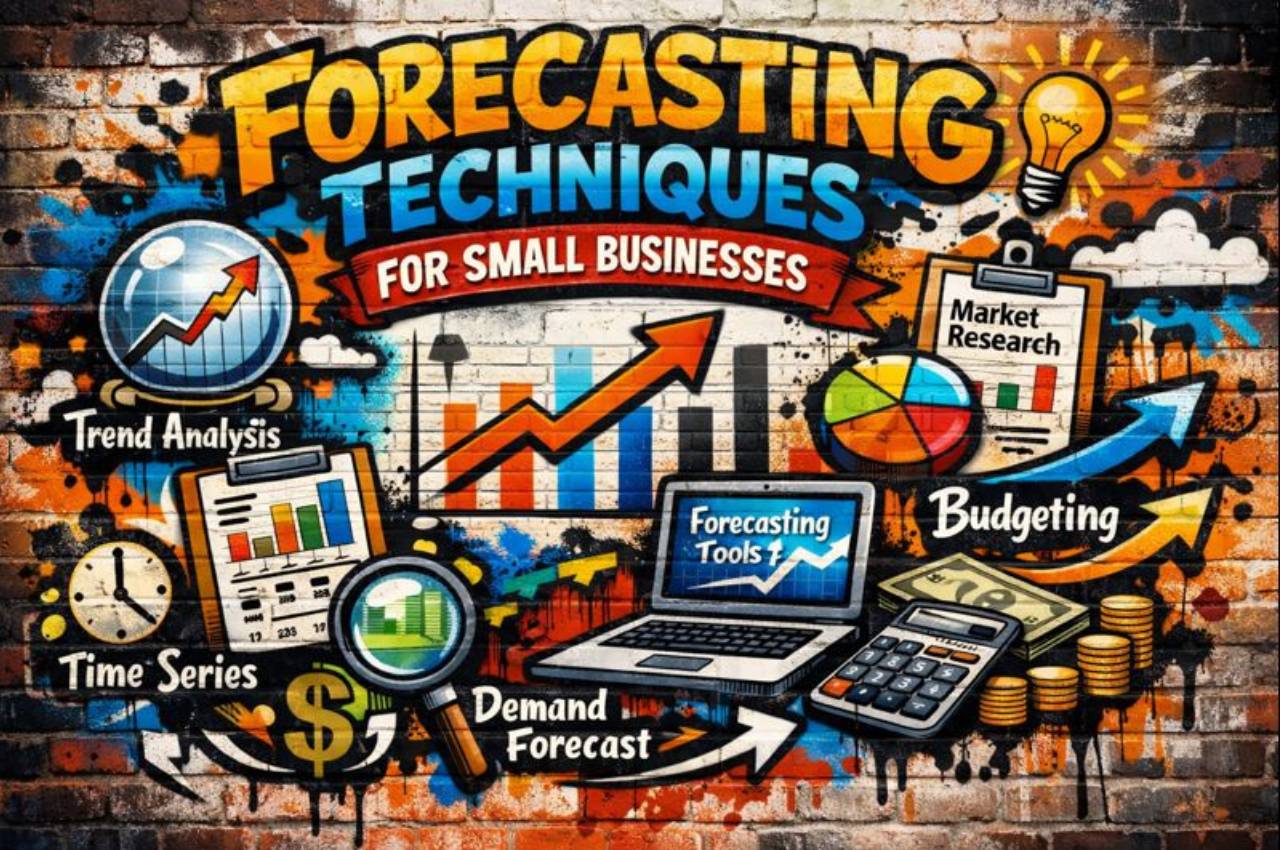
Financial reporting is a cornerstone of sound business management, especially in data-driven and teBusiness forecasting helps small businesses anticipate future outcomes based on historical and current data. It supports smarter decisions related to sales, inventory, staffing, and cash flow. Without forecasting, companies often rely on intuition, which increases financial risk. Even simple forecasting models can significantly improve stability and growth. For small businesses, forecasting is less about perfection and more about direction.
Why Forecasting Matters
Accurate forecasts reduce uncertainty and improve confidence in planning. They allow owners to prepare for demand changes instead of reacting too late.
Short-Term vs Long-Term Outlooks
Short-term forecasts focus on weeks or months, while long-term forecasts guide strategic goals such as expansion or investment.
Sales Forecasting Methods
Sales forecasting estimates future revenue using past sales data and market signals. It is one of the most critical forecasting techniques for small businesses. Proper sales forecasts help avoid overstocking or missed opportunities. Even basic monthly tracking can reveal seasonal patterns. Reliable sales forecasts also support marketing and pricing decisions.
Historical Data Analysis
Using past sales trends is the simplest and most common approach. It works well when the market is stable.
Market-Driven Estimation
This approach factors in competition, market growth, and customer behavior, making it useful in dynamic industries.
Demand Forecasting for Products and Services
Demand forecasting predicts customer needs before they happen. It helps businesses align supply with expected demand. Small businesses benefit by reducing waste and improving customer satisfaction. Demand forecasting is especially important in retail and subscription-based models. Technology has made demand forecasting more accessible than ever.
Seasonality Recognition
Identifying seasonal spikes or drops prevents shortages or excess inventory. Many small businesses overlook this factor.
Customer Behavior Signals
Website traffic, inquiries, and repeat purchases can all indicate future demand patterns.
Financial Forecasting and Cash Flow Planning
Financial forecasting focuses on income, expenses, and profitability. It ensures that businesses maintain healthy cash flow. Poor cash flow is one of the top reasons small businesses fail. Forecasting helps anticipate funding gaps before they become crises. It also improves relationships with investors and lenders.
Revenue Projections
Estimating future income helps plan expenses realistically. Overestimating revenue is a common risk.
Expense Forecasting
Predicting fixed and variable costs prevents surprises and supports better budgeting.
Time Series Forecasting Techniques
Time series forecasting uses data points collected over time. It is ideal for businesses with consistent historical records. These techniques detect patterns such as trends and cycles. While they sound complex, many tools automate the process. Small businesses can apply them without advanced technical skills.
Trend Analysis
Trend analysis identifies long-term upward or downward movement in data. It supports strategic planning.
Moving Averages
This method smooths short-term fluctuations to highlight overall direction.
Qualitative Forecasting Approaches
Qualitative forecasting relies on expert judgment rather than pure data. It is useful when historical data is limited or markets are changing rapidly. Startups and new product launches often depend on this approach. While subjective, it adds valuable context. Combining it with quantitative methods improves accuracy.
Expert Opinions
Industry experts and consultants provide insights that data alone cannot capture.
Customer Feedback
Surveys and interviews reveal expectations and future buying intentions.
AI and Automation in Forecasting
Artificial intelligence has transformed forecasting for small businesses. AI models analyze large datasets faster and more accurately than manual methods. Cloud-based tools now offer affordable AI forecasting solutions. These systems continuously improve as more data is added. Automation reduces human error and saves time.
Machine Learning Models
Machine learning adapts to new patterns automatically, improving forecast accuracy over time.
Predictive Analytics Tools
Modern software integrates forecasting directly into accounting and CRM systems.
Real-World Case Study: Retail Forecasting Success
A small online clothing retailer struggled with excess inventory and cash shortages. By implementing AI-based sales and demand forecasting, the business analyzed two years of sales data. The system identified seasonal trends and optimized reorder points. Within six months, inventory waste dropped significantly. Cash flow stabilized, enabling reinvestment in marketing.
Problem Identification
Unplanned purchasing decisions caused overstock and tied up capital.
Forecast-Driven Solution
Data-driven forecasts aligned inventory with real customer demand.
Challenges and Limitations of Forecasting
Forecasting is not free from errors or uncertainty. External factors like economic shifts or supply chain disruptions can impact accuracy. Small businesses may also struggle with poor data quality. Overreliance on one method increases risk. Awareness of limitations leads to better use of forecasts.
Data Quality Issues
Incomplete or inaccurate data leads to unreliable predictions.
Unexpected Market Changes
Forecasts must be updated regularly to reflect new realities.
Statistics
Accurate statistics highlight the impact of forecasting on small businesses.
- Businesses using forecasting tools are 30% more likely to meet revenue targets compared to those that do not.
- Poor cash flow causes 82% of small business failures, often due to lack of financial forecasting.
- AI-driven forecasting improves demand prediction accuracy by up to 50% in retail sectors.
- Companies using data-driven forecasting reduce inventory costs by 20–25% on average.
- Sales forecasting errors can increase operational costs by 15% annually.
- Small businesses using predictive analytics grow revenue 2.5 times faster than competitors.
- Automated forecasting tools reduce planning time by 40% compared to manual methods.
The Most Common Mistakes in Forecasting
Many small businesses treat forecasting as a one-time task rather than a continuous process. Others rely solely on intuition without validating assumptions. Ignoring external market data leads to unrealistic projections. Overcomplicating models without understanding them also reduces effectiveness. Finally, failing to update forecasts regularly makes them obsolete.
Frequently Asked Questions
Is forecasting useful for very small businesses?
Yes, even micro-businesses benefit from simple forecasting to manage cash flow and inventory.
How often should forecasts be updated?
Monthly updates are recommended, with weekly reviews for fast-moving businesses.
Do I need advanced software to forecast accurately?
No, basic tools can work, but advanced software improves speed and accuracy.
Can forecasts be 100% accurate?
No forecast is perfect, but good forecasting significantly reduces uncertainty.
What data is most important for forecasting?
Sales history, expenses, customer behavior, and market trends are essential.
Conclusion
Forecasting techniques empower small businesses to move from reactive decisions to proactive planning. By combining financial, sales, demand, and AI-driven methods, businesses gain clarity and control. Forecasting reduces risk, improves cash flow, and supports sustainable growth. While challenges exist, consistent and realistic forecasting delivers long-term value. For small businesses aiming to scale, forecasting is no longer optional—it is essential.
