

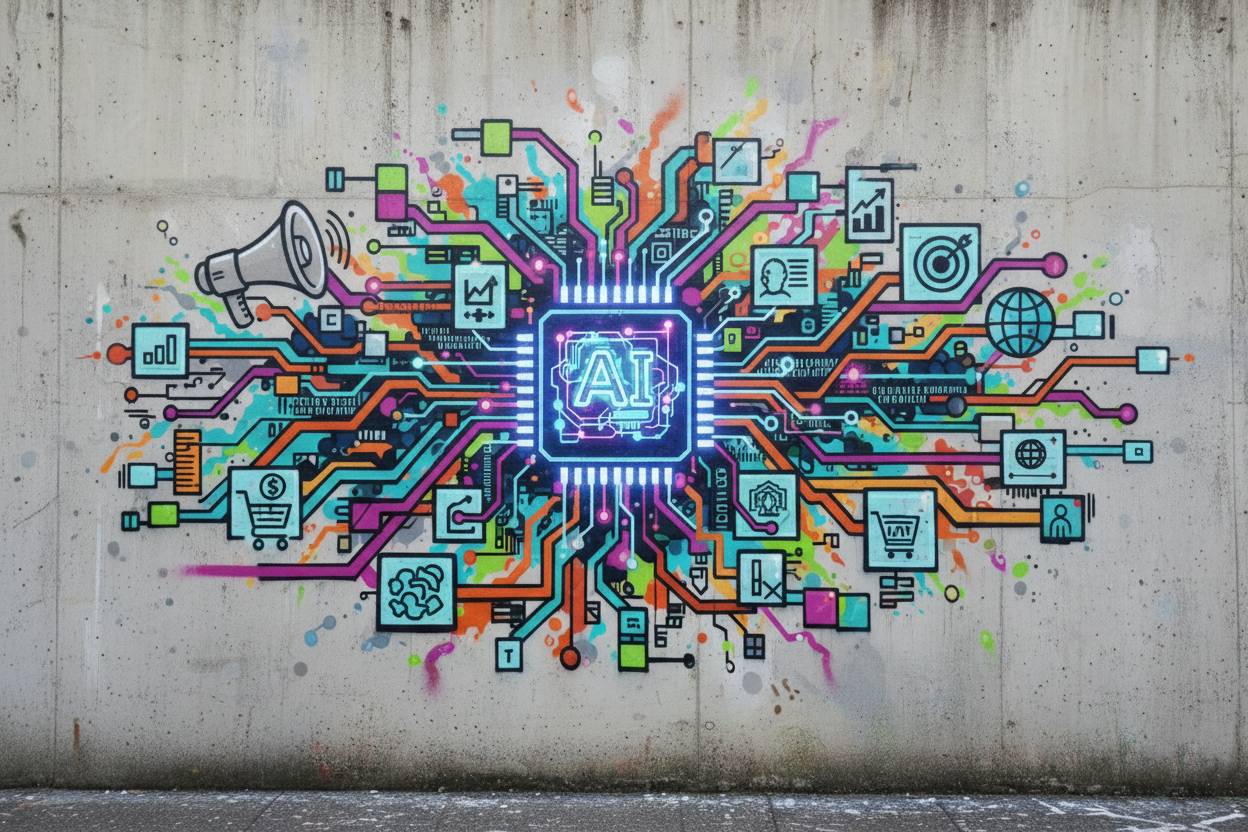
AI marketing automation refers to the use of artificial intelligence technologies to plan, execute, personalize, and optimize marketing activities with minimal human intervention. In e-commerce, it enables brands to analyze massive customer data in real time and respond with highly relevant offers. This approach goes beyond traditional automation by learning from behavior patterns and continuously improving results. Businesses use it to scale marketing efforts without scaling costs. The outcome is faster decision-making and higher conversion efficiency.
Machine Learning in Marketing
Machine learning allows systems to predict customer behavior based on past interactions. It continuously refines campaigns by learning what works and what does not.
- Predicts purchase intent
- Optimizes timing of campaigns
- Improves targeting accuracy
Natural Language Processing
NLP enables AI systems to understand and generate human-like language. It is essential for chatbots, email personalization, and customer sentiment analysis.
- Powers AI chatbots
- Analyzes reviews and feedback
- Personalizes written content
Why AI Matters for E-commerce Growth
E-commerce markets are highly competitive, and customer attention is limited. AI helps businesses deliver the right message at the right time across multiple channels. It reduces manual work while increasing marketing precision. Companies that adopt AI-driven automation often outperform competitors in customer retention and lifetime value. Growth becomes data-driven instead of guess-based.
Customer Expectations
Modern shoppers expect personalized experiences across all touchpoints. AI enables real-time personalization at scale.
- Personalized product recommendations
- Dynamic pricing strategies
- Tailored email and SMS campaigns
Operational Efficiency
AI automation reduces repetitive marketing tasks and human error. Teams can focus on strategy instead of execution.
- Automated campaign management
- Reduced operational costs
- Faster go-to-market execution
Personalization at Scale
Personalization is no longer optional in e-commerce. AI makes it possible to customize experiences for millions of users simultaneously. It analyzes browsing history, purchase behavior, and engagement patterns to tailor offers. This results in higher engagement and conversion rates. Personalized experiences also strengthen brand loyalty.
Product Recommendations
AI-driven recommendation engines suggest products based on user behavior and preferences. This significantly increases average order value.
- Cross-selling opportunities
- Upselling strategies
- Real-time recommendations
Dynamic Content Delivery
AI adapts website content in real time depending on the user profile. Each visitor sees a unique version of the store.
- Personalized landing pages
- Adaptive banners and offers
- Location-based content
AI-Powered Customer Journey Optimization
AI tracks customers across the entire buying journey, from awareness to post-purchase. It identifies drop-off points and opportunities for improvement. By optimizing each stage, businesses reduce friction and increase conversions. The result is a smoother and more profitable customer experience.
Predictive Analytics
Predictive models forecast future customer actions such as churn or repeat purchases. This helps brands act proactively.
- Churn prediction
- Lifetime value forecasting
- Demand forecasting
Behavioral Segmentation
AI groups customers based on real behavior instead of static demographics. Segmentation becomes more accurate and actionable.
- High-intent buyers
- Price-sensitive customers
- Loyal repeat purchasers
Marketing Channels Enhanced by AI
AI marketing automation integrates seamlessly across multiple channels. It ensures consistent messaging while optimizing performance for each platform. E-commerce brands benefit from unified customer insights. This omnichannel approach maximizes ROI.
Email and SMS Marketing
AI optimizes send times, content, and frequency. Messages become more relevant and less intrusive.
- Automated drip campaigns
- Personalized subject lines
- Behavior-triggered messages
Paid Advertising Optimization
AI manages bids, creatives, and targeting in real time. Ad spend becomes more efficient.
- Smart bidding strategies
- Audience expansion
- Creative performance testing
Data-Driven Decision Making
AI transforms raw data into actionable insights. E-commerce teams can make faster and more confident decisions. This reduces reliance on intuition and manual analysis. Data becomes a strategic asset rather than a burden.
Real-Time Dashboards
AI-powered dashboards provide instant insights into campaign performance. Decisions can be adjusted immediately.
- Live performance tracking
- Automated alerts
- Cross-channel analytics
Continuous Optimization
AI systems constantly test and refine campaigns. Optimization never stops.
- A/B testing automation
- Performance-based adjustments
- Self-learning algorithms
Case Study: AI Automation in a Mid-Size E-commerce Brand
A mid-size online fashion retailer implemented AI marketing automation using an AI-driven CRM and recommendation engine. Within six months, the brand personalized email campaigns based on browsing behavior and purchase history. Cart abandonment emails were triggered automatically with dynamic discounts. The result was a significant increase in conversion rate and repeat purchases. Marketing costs decreased while revenue grew consistently.
Implementation Strategy
The brand integrated AI tools with its existing e-commerce platform. Data from website activity and customer profiles fueled the system.
- CRM integration
- Behavioral data tracking
- Automated workflows
Measurable Results
Performance improved across key metrics after automation.
- Higher email open rates
- Increased average order value
- Reduced cart abandonment
Common Mistakes in AI Marketing Automation
Many businesses fail to achieve results due to poor implementation. AI is powerful but requires correct strategy and data quality. Avoiding common mistakes ensures long-term success. Understanding limitations is as important as leveraging strengths.
Poor Data Quality
AI depends on accurate and clean data. Bad data leads to bad decisions.
- Incomplete customer profiles
- Outdated databases
- Inconsistent data sources
Over-Automation
Automating everything without strategy can harm the customer experience. Human oversight remains essential.
- Generic messaging
- Loss of brand voice
- Reduced customer trust
Future of AI in E-commerce Marketing
AI marketing automation will continue to evolve rapidly. Future systems will become more autonomous and predictive. E-commerce brands that invest early gain a competitive advantage. The focus will shift from automation to intelligent orchestration.
Hyper-Personalization
AI will deliver individualized experiences at every interaction point. Marketing will feel more human.
- One-to-one messaging
- Context-aware offers
- Emotion-driven personalization
AI-Driven Strategy
AI will not only execute but also recommend marketing strategies. Decision-making will become more collaborative between humans and machines.
- Strategic recommendations
- Automated budget allocation
- Predictive growth planning
Statistics
- Businesses using AI-driven personalization see revenue increases of up to 15%.
- AI-powered marketing automation can reduce customer acquisition costs by nearly 30%.
- E-commerce companies using AI recommendations generate up to 35% of total sales from them.
- Automated email campaigns powered by AI achieve open rates 25% higher than standard campaigns.
- AI-driven ad optimization improves return on ad spend by an average of 20%.
- Predictive analytics can increase customer retention rates by up to 10%.
- Over 70% of leading e-commerce brands already use some form of AI marketing automation.
Frequently Asked Questions
Is AI marketing automation suitable for small e-commerce stores?
Yes, many AI tools are scalable and affordable, making them suitable for small and medium businesses.
How long does it take to see results from AI automation?
Most businesses start seeing measurable improvements within three to six months.
Does AI replace human marketers?
No, AI supports marketers by automating execution while humans focus on strategy and creativity.
What data is required to start AI marketing automation?
Customer behavior data, purchase history, and engagement metrics are essential starting points.
Is AI marketing automation safe for customer privacy?
When implemented correctly and compliant with data protection laws, it is safe and secure.
Conclusion
AI marketing automation has become a critical growth driver for e-commerce businesses. It enables personalization at scale, improves operational efficiency, and supports data-driven decision-making. When implemented with the right strategy and clean data, AI delivers measurable and sustainable sales growth. As competition intensifies, adopting AI is no longer an advantage—it is a necessity.
