

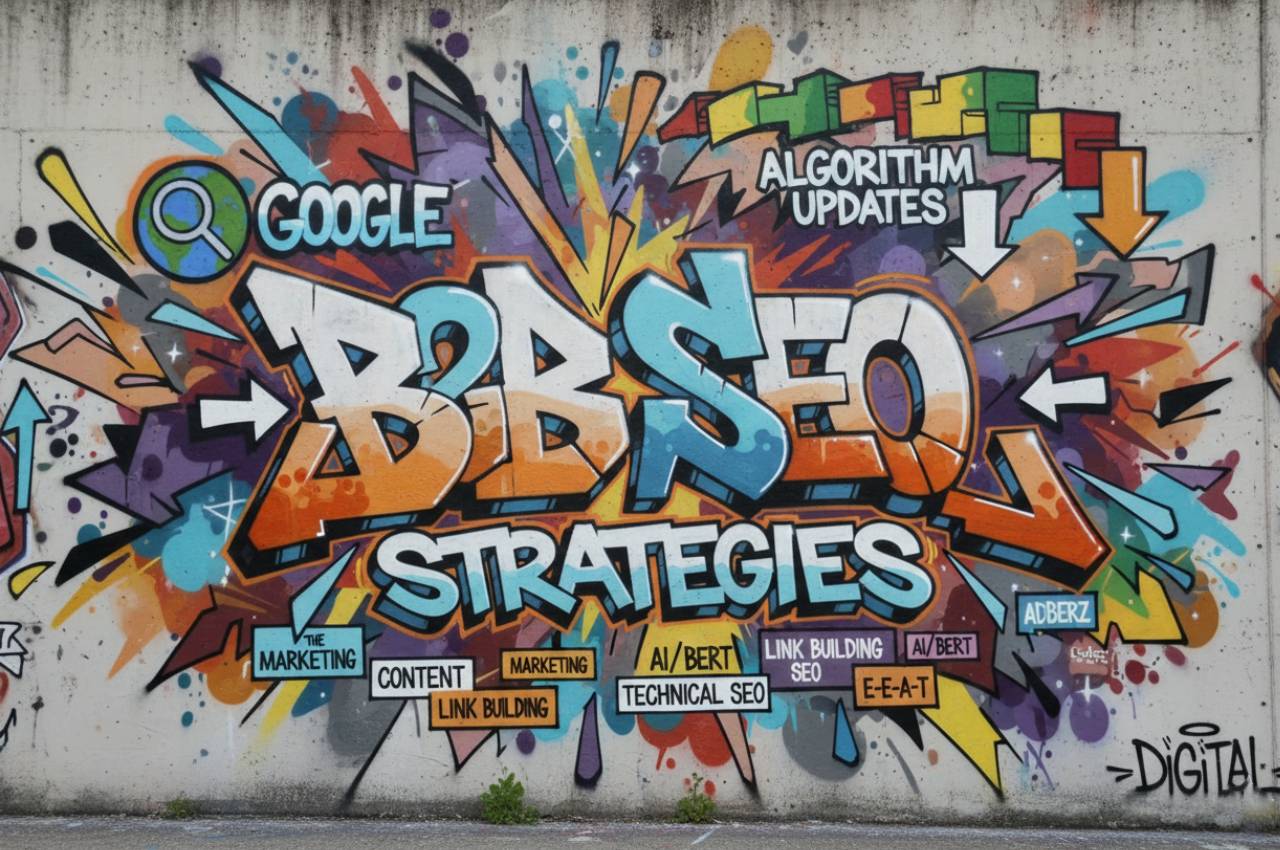
In today’s digital landscape, B2B companies must constantly evolve their SEO strategies to stay visible, credible, and competitive — especially after Google rolls out algorithm updates that reshape how search engines rank content. These updates aren’t merely technical tweaks; they reflect Google’s deeper shift toward rewarding user-focused, authoritative, and semantically relevant content that aligns with the intent of modern B2B buyers.LZC Marketing+1
Why B2B SEO Matters in the Era of Algorithm Updates
SEO is not just about ranking for keywords; it’s about being discoverable where your audience spends the most time — at the start of their research journey. Organic search drives a significant percentage of B2B leads, often outperforming paid channels in long-term ROI. However, frequent Google updates — especially around E-E-A-T (Experience, Expertise, Authoritativeness, Trustworthiness), semantic understanding, and mobile usability — mean that B2B SEO strategies must be agile, data-driven, and aligned with user intent.marketingseodirectory.com+1
Key Statistics That Reveal How SEO Is Evolving
• 68% of B2B SEO professionals plan to increase investment in AI-powered SEO services, reflecting the role of automation and machine learning tools in optimization.B2B Digital Marketers
• Generative AI, E-E-A-T, and automation tools are top cited disruptors expected to shape SEO performance, signaling a shift from basic keyword targeting to nuanced content strategies.B2B Digital Marketers
• High-quality content, meaningful backlinks, and solid technical foundations are increasingly central to visibility — outperforming simple tactics like keyword stuffing.LZC Marketing
These figures show that B2B brands must now optimize for both humans and machines simultaneously — prioritizing relevance, trust, and semantic comprehension.
Top B2B SEO Strategies to Adapt After Algorithm Changes
1. Perform Frequent SEO Audits
After updates, sites can quickly lose visibility if technical issues go unnoticed. Regular audits of Core Web Vitals, crawl errors, index coverage, and mobile performance help you stay ahead of surprises.marketingseodirectory.com
2. Elevate Your E-E-A-T Signals
Google’s evolving algorithm prioritizes experience and authority — especially for complex B2B content. Showcase your team’s credentials, cite trusted sources, and use data-backed insights to reinforce credibility.marketingseodirectory.com
3. Update Your Keyword Strategy
Instead of targeting competitive, generic keywords, focus on intent-driven long-tail phrases that align with each stage of the B2B buyer journey — awareness, evaluation, and decision.marketingseodirectory.com
4. Refresh and Repurpose Content Continuously
Search engines favor freshness — especially for detailed guides, whitepapers, and industry insights. Updated content keeps your resources relevant and signals ongoing value.tripledart.com
5. Build Relevant, High-Quality Backlinks
External links from reputable industry sites still act as votes of confidence for your authority and can improve positioning in B2B vertical searches.redseo.io
6. Optimize for Mobile and User Experience
Mobile-first indexing means your site must be responsive, fast, and easy to navigate. Strong UX reduces bounce rate and increases engagement — both ranking factors.LZC Marketing
7. Use Schema Markup and Structured Data
Adding schema (Article, FAQ, Product/Service) helps search engines understand context more effectively and can improve click-through rates via rich results.marketingseodirectory.com
8. Track, Respond, and Evolve
With every update, monitor analytics via tools like Google Search Console, GA4, and rank trackers. Understand where visibility dips occur and adjust: both content and technical fixes.marketingseodirectory.com
Real (Or Simulated) Case Study: Recovering After a Core Update
Case: TechSolutions Inc. — a mid-sized B2B SaaS provider
After a core Google algorithm update, organic traffic dropped by 25% in under 30 days. Internal analysis showed top-ranking pages for long-tail phrases had thin, outdated content with weak authority signals.
Actions Taken:
- Content enrichment — expanded high-traffic pages with up-to-date insights, real customer use cases, and authoritative references.
- Improve E-E-A-T — highlighted expert authorship and certifications.
- Backlink campaign — earned links from three respected industry blogs.
- Schema Implementation — added FAQ and Article structured data.
Results: Within three months, organic visits increased 40%, and key pages climbed back into the top 5 rankings. This demonstrates agility, quality content, and trust can restore search performance after an algorithm shift.
Common Mistakes in B2B SEO Today
❌ Relying only on old keywords — ignoring intent and emerging queries.
❌ Ignoring technical SEO issues — slow pages and mobile flaws lower rankings.
❌ Keyword stuffing instead of value creation — no real user benefit.
❌ Neglecting backlinks — missing authority-building opportunities.
❌ Failing to track update impacts — without analytics, you can’t recover quickly.
Frequently Asked Questions (FAQ)
Q1: How often should I update SEO content after an algorithm change?
A: Aim for quarterly reviews at minimum — and immediate updates for top-traffic pages.
Q2: Do backlinks still matter for B2B SEO?
A: Yes — but quality and relevance trump volume. Links from trusted industry sources boost authority.redseo.io
Q3: Should I use AI to write SEO content?
A: AI tools help with research, but human expertise ensures depth, relevance, and trustworthiness.
Q4: What metrics matter most after an update?
A: Track organic traffic, rankings, bounce rates, and conversions to understand the impact.
Q5: Can B2B sites still rank well without technical SEO improvements?
A: Not in 2025+. Strong UX and mobile performance are ranking fundamentals.LZC Marketing
Conclusion
B2B SEO in the wake of Google algorithm updates is no longer about gaming the system — it’s about meeting user expectations with authoritative, intent-aligned, technically solid content. By combining strategic audits, content evolution, strong E-E-A-T signals, and responsive monitoring, B2B brands can not only survive updates but thrive in search and drive meaningful organic growth long term. Through case insights and proactive steps, your SEO engine can become both resilient and results-driven — ensuring visibility in a world where search continues to evolve quickly and relentlessly.

Hi, this is a comment.
To get started with moderating, editing, and deleting comments, please visit the Comments screen in the dashboard.
Commenter avatars come from Gravatar.
uxf8r7
I just could not depart your website before suggesting that
I extremely loved the usual information a person supply in your visitors?
Is gonna be back steadily in order to check up on new posts
Thanks for your marvelous posting! I seriously enjoyed reading it, you could
be a great author. I will remember to bookmark your blog
and definitely will come back in the future. I want to encourage you to continue your
great writing, have a nice weekend!
same day loans cash advance app
quickest payday loans online
My doctor increased my dose, and I had to update the prescription. I
uploaded the new script, and they adjusted my next shipment automatically.
No phone calls, no confusion. Easy update process.
Synthroid dose change handled.
espironolactona acne