

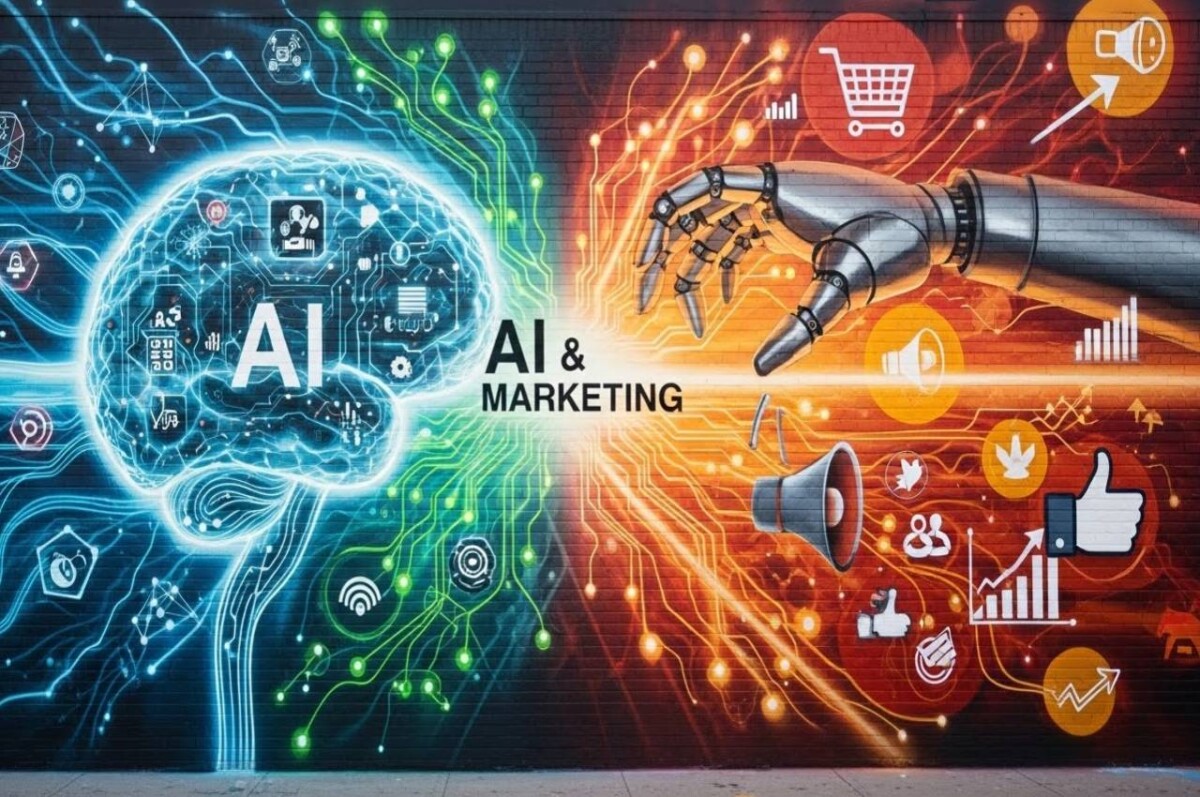
Artificial intelligence has transformed how marketers identify and reach their ideal audiences. By analyzing massive volumes of behavioral, demographic, and intent data, AI uncovers patterns that humans cannot detect at scale. This leads to more precise segmentation and reduced ad waste. Marketers can now focus budgets on users most likely to convert. As a result, campaigns become leaner and more effective over time.
Predictive Audience Modeling
AI anticipates which users are most likely to engage or purchase based on historical behavior and real-time signals.
Lookalike Expansion
Machine learning builds high-quality lookalike audiences that mirror top-performing customer segments.
Personalized Customer Experiences
AI enables deep personalization across websites, emails, and ads. Content, offers, and messaging adapt dynamically to each user. This increases relevance and emotional connection with the brand. Personalized journeys also shorten the path to conversion. Over time, brands gain stronger customer loyalty.
Dynamic Content Delivery
AI customizes headlines, visuals, and offers in real time based on user context.
Behavior-Based Recommendations
Recommendation engines suggest products or content aligned with user interests and past actions.
Smarter Content Creation and Optimization
AI assists marketers in creating high-performing content faster. It analyzes what formats, topics, and tones resonate most with audiences. This reduces guesswork and speeds up production cycles. Content performance improves consistently through data-driven refinement. Creative teams gain more time for strategy.
AI-Assisted Writing
Natural language models help draft, refine, and localize marketing copy efficiently.
Performance-Based Optimization
AI evaluates engagement metrics to continuously improve content quality and relevance.
Data-Driven Campaign Decision Making
AI converts raw marketing data into actionable insights. It processes millions of data points across channels instantly. This allows marketers to adjust campaigns in real time. Decisions become proactive instead of reactive. ROI improves as inefficiencies are quickly eliminated.
Real-Time Analytics
AI dashboards surface insights instantly, highlighting what works and what doesn’t.
Automated Budget Allocation
Budgets are shifted automatically toward high-performing channels and campaigns.
Enhanced Customer Journey Mapping
AI tracks and analyzes every touchpoint in the customer journey. It reveals friction points that hinder conversions. Marketers can then optimize experiences across channels. This leads to smoother, more satisfying user journeys. Customer satisfaction and retention both increase.
Cross-Channel Attribution
AI accurately assigns value to each marketing touchpoint across platforms.
Journey Optimization
Machine learning identifies where users drop off and suggests improvements.
Marketing Automation at Scale
AI-powered automation enables brands to operate efficiently at scale. Repetitive tasks are handled automatically without losing personalization. Campaign execution becomes faster and more consistent. Teams can focus on creative and strategic initiatives. Overall productivity increases significantly.
Automated Campaign Execution
Emails, ads, and messages are triggered based on user behavior and timing.
Workflow Optimization
AI streamlines internal processes and reduces manual intervention.
Improved Lead Scoring and Conversion Rates
AI refines how leads are evaluated and prioritized. Instead of static scoring rules, models adapt continuously. Sales teams receive higher-quality leads. Conversion rates improve as outreach becomes more relevant and timely. Revenue impact becomes measurable.
Adaptive Lead Scoring
Scores adjust dynamically based on evolving user behavior.
Sales-Marketing Alignment
AI insights help sales teams engage leads with higher intent.
Predictive Analytics for Future Growth
AI helps marketers anticipate trends before they happen. It analyzes historical data to forecast demand and behavior shifts. This enables proactive campaign planning. Brands gain a competitive edge by acting early. Long-term growth becomes more sustainable.
Demand Forecasting
AI predicts seasonal and market-driven changes in customer demand.
Churn Prediction
Models identify customers at risk of leaving, enabling retention strategies.
Ethical and Responsible AI in Marketing
Responsible AI use is essential for long-term success. Transparency and data privacy build consumer trust. Ethical AI practices also ensure regulatory compliance. Brands that respect user data gain stronger reputations. Trust becomes a key performance driver.
Data Privacy Protection
AI systems are designed to comply with global data protection regulations.
Bias Reduction
Algorithms are monitored and refined to avoid discriminatory outcomes.
Statistics
AI-driven personalization can increase marketing ROI by up to 30%.
Companies using AI in marketing report up to 20% higher conversion rates.
AI-powered email campaigns achieve around 40% higher open rates on average.
Predictive analytics can reduce customer churn by approximately 15%.
Over 60% of marketers now use AI for audience segmentation.
Marketing automation with AI can cut operational costs by nearly 25%.
Brands leveraging AI insights are twice as likely to outperform competitors.
Case Study Example
A global eCommerce brand integrated AI-driven personalization across its website and email campaigns. By analyzing browsing behavior and purchase history, the AI system delivered tailored product recommendations. Within six months, average order value increased significantly and email-driven revenue grew steadily. The brand also reduced ad spend waste by reallocating budgets using AI predictions. This demonstrates how AI directly improves marketing performance when applied strategically.
Frequently Asked Questions
How does AI differ from traditional marketing tools?
AI continuously learns from data and adapts, while traditional tools rely on fixed rules.
Is AI suitable for small businesses?
Yes, many AI marketing tools are scalable and affordable for small teams.
Does AI replace human marketers?
AI enhances human capabilities but does not replace creativity and strategic thinking.
How long does it take to see results from AI marketing?
Initial improvements can appear within weeks, with stronger results over months.
Is customer data safe when using AI?
When implemented correctly, AI systems comply with data protection standards.
Common Mistakes in Using AI for Marketing
Relying entirely on automation without human oversight.
Using poor-quality or insufficient data to train AI models.
Ignoring ethical considerations and user privacy.
Expecting instant results without proper optimization.
Failing to align AI tools with clear business objectives.
Conclusion
AI has become a powerful driver of marketing performance. It enhances targeting, personalization, automation, and decision-making across the entire funnel. When used responsibly and strategically, AI delivers measurable growth and efficiency. Brands that invest in AI today are better positioned to compete tomorrow. The future of marketing performance is undeniably intelligent.
