

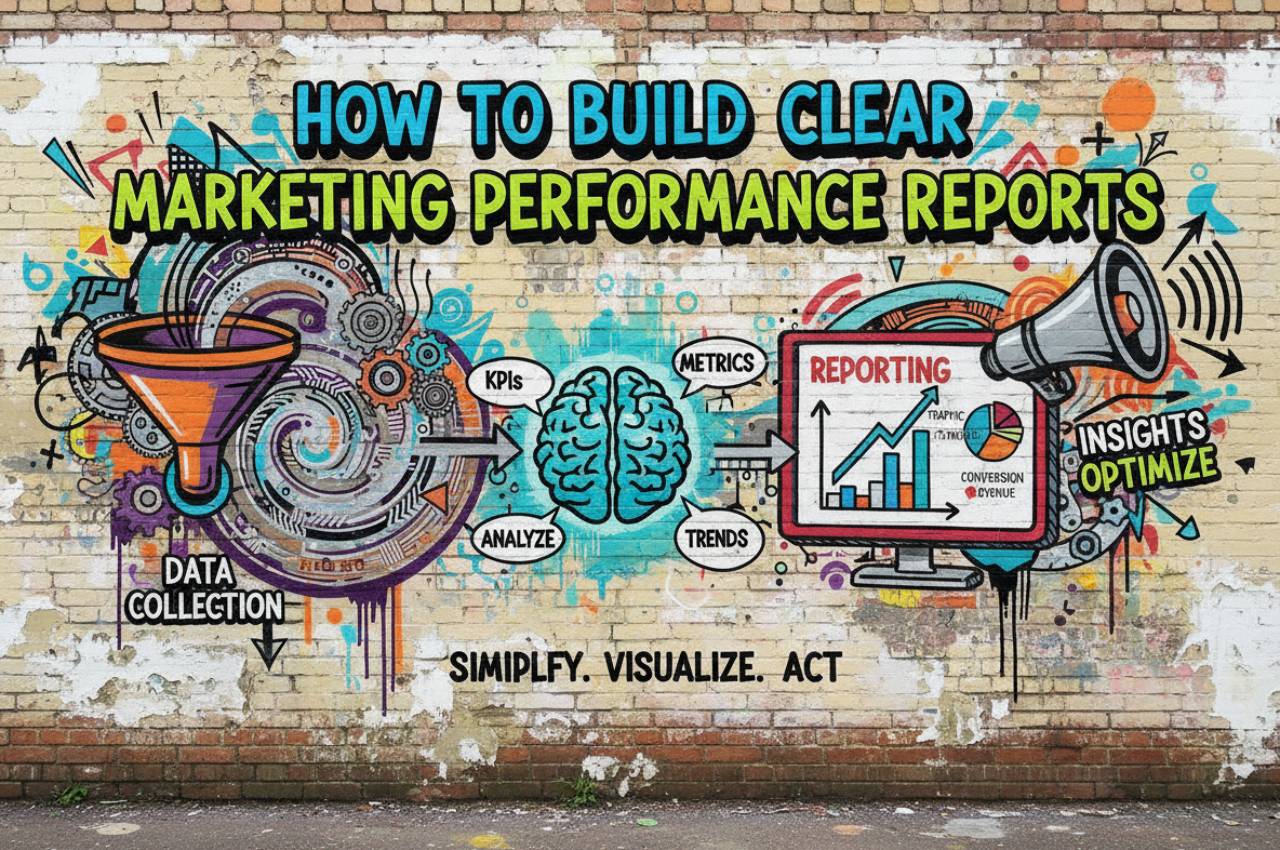
Marketing analytics is essential for modern businesses seeking to make data-driven decisions. By tracking keyEffective marketing performance reporting is critical for businesses to understand the impact of their campaigns and make data-driven decisions. Clear reports help teams track progress, optimize campaigns, and communicate results to stakeholders. Unfortunately, many businesses struggle with inconsistent reporting formats, irrelevant metrics, or unclear insights. This article will guide you through building structured and actionable marketing performance reports.
Choosing the Right Metrics
Selecting the right metrics ensures your marketing report reflects your business objectives accurately. Instead of tracking every available KPI, focus on metrics that directly impact your goals, like website traffic, leads, and conversions. Choosing meaningful metrics prevents information overload and highlights actionable insights. Clear alignment between metrics and objectives improves decision-making for marketing teams and stakeholders.
Align Metrics with Objectives
Reports should always reflect your marketing goals. For example:
- Increase website traffic
- Generate qualified leads
- Boost conversion rates
Prioritize Actionable Metrics
Actionable metrics provide insights that lead to concrete actions. Examples include:
- Cost per acquisition (CPA)
- Customer lifetime value (CLV)
- Return on ad spend (ROAS)
Data Collection and Accuracy
Reliable data is the backbone of effective marketing reports. Inaccurate or inconsistent data can lead to wrong conclusions and wasted marketing budgets. Using trusted tools like Google Analytics, CRMs, and social media analytics helps ensure precision. Regular audits and cross-checks are crucial to identify discrepancies and maintain credibility in your reports.
Use Reliable Data Sources
Integrate tools like Google Analytics, CRM systems, and social media insights. This ensures consistency and accuracy.
- Cross-check data from multiple platforms
- Automate data collection to minimize human error
Regular Data Audits
Perform audits regularly to identify anomalies or gaps.
- Check tracking codes
- Validate conversions and engagement metrics
Visualizing Data Effectively
Data visualization turns complex metrics into easily digestible insights. Proper charts and graphics allow stakeholders to spot trends, compare results, and understand campaign performance at a glance. Emphasizing key takeaways using colors, annotations, and summaries makes reports more actionable. Clear visuals bridge the gap between raw data and strategic decisions.
Choose the Right Charts
Use charts suited for your data type:
- Line charts for trends over time
- Pie charts for market share distribution
- Bar charts for comparison across campaigns
Highlight Key Insights
Focus on the data that matters most. Use colors, annotations, and summaries to guide readers.
- Emphasize significant performance changes
- Compare actual results vs. targets
Segmenting Your Audience
Segmenting your audience helps marketers understand behavior differences across customer groups. By analyzing demographic or behavioral segments, campaigns can be targeted more effectively. This improves engagement and conversion rates while ensuring marketing budgets are used efficiently. Segmentation allows businesses to deliver the right message to the right people at the right time.
Behavior-Based Segmentation
Group users by actions such as clicks, purchases, or downloads.
- Helps identify high-performing segments
- Guides targeted campaigns
Demographic Segmentation
Divide by age, gender, location, or industry to tailor messaging.
- Useful for ad targeting
- Optimizes budget allocation
Incorporating Attribution Models
Attribution models clarify which marketing channels or touchpoints drive conversions. Whether using first-touch, last-touch, or multi-touch models, businesses can measure ROI accurately. Multi-touch attribution, in particular, provides a comprehensive view of how multiple interactions influence customer decisions. Choosing the right model ensures marketers focus on the channels that truly generate results.
First-Touch vs. Last-Touch
- First-touch: measures the first interaction’s influence
- Last-touch: credits the final interaction before conversion
Multi-Touch Attribution
- Assigns value across all touchpoints
- Provides a holistic view of marketing performance
Using Benchmarks and Comparisons
Benchmarks allow marketers to evaluate performance relative to past campaigns or industry standards. Historical comparisons show trends and seasonal effects, while industry benchmarks help set realistic expectations. Using benchmarks helps identify gaps, opportunities, and areas for improvement. This contextual perspective increases confidence in performance analysis.
Historical Benchmarks
Compare current results with past campaigns to identify trends.
- Seasonal adjustments
- Year-over-year comparisons
Industry Benchmarks
Evaluate performance relative to competitors or industry norms.
- Helps set realistic targets
- Supports performance evaluation
Automating Reports
Automation simplifies report generation, reduces errors, and saves time. Integrating dashboards with analytics platforms ensures real-time tracking of KPIs. Scheduled reports provide consistency while freeing teams to focus on strategy rather than manual data compilation. Automated reporting also improves accuracy and responsiveness to campaign changes.
Dashboard Integration
- Connect Google Analytics, social media platforms, and CRM systems
- Monitor KPIs continuously
Scheduled Reporting
- Weekly, monthly, or quarterly automated reports
- Reduces manual errors and time spent on data compilation
Real Case Study: E-Commerce Campaign Reporting
Practical examples show how structured reporting improves outcomes. For instance, an e-commerce brand leveraged automated dashboards to track email campaigns, resulting in a 25% revenue increase by segmenting users based on behavior. Case studies demonstrate how clear, actionable reporting leads to measurable business growth. Lessons learned can be applied across industries and marketing channels.
Common Mistakes in Marketing Reports
Even experienced marketers often fall into reporting pitfalls. Overloading reports with irrelevant metrics, inconsistent formats, or unvalidated data can obscure insights. Ignoring context or focusing solely on numbers instead of actionable takeaways limits the value of reports. Awareness of these mistakes ensures reporting practices are accurate, meaningful, and impactful.
- Overloading reports with irrelevant metrics
- Ignoring context for data trends
- Using inconsistent formats that confuse stakeholders
- Failing to validate data accuracy
FAQ
What metrics are most important in marketing reports?
KPIs like ROAS, CPA, conversion rates, and engagement metrics provide actionable insights.
How often should marketing performance reports be generated?
Depending on campaign length and business needs, reports should be weekly, monthly, or quarterly.
Should reports focus more on data or insights?
Both are essential, but actionable insights should always accompany raw data to guide decisions.
Can automated dashboards replace manual reports?
Yes, automation improves consistency and reduces errors, but human analysis is necessary for contextual understanding.
What is the best way to present reports to executives?
Use a concise summary with visuals, highlighting key insights, trends, and actionable recommendations.
Statistics
- 79% of marketers report that data-driven decision-making improves ROI.
- 61% of marketers say poor reporting is a major obstacle to campaign success.
- Multi-touch attribution increases conversion accuracy by 25% in B2C campaigns.
- Automated dashboards reduce report generation time by 40%.
- Segmented campaigns outperform generic campaigns by 20–30%.
- Companies that align KPIs with business goals see a 33% increase in marketing efficiency.
- Visualized reports are 30% more likely to be acted upon by executives.
Conclusion
Clear marketing performance reports are not just a documentation tool—they are a strategic asset that informs decision-making, improves ROI, and drives continuous optimization. By selecting the right metrics, ensuring data accuracy, visualizing insights, and using automation, businesses can turn complex data into actionable intelligence. Avoid common reporting mistakes, leverage segmentation and attribution, and always focus on insights that lead to measurable outcomes.
