

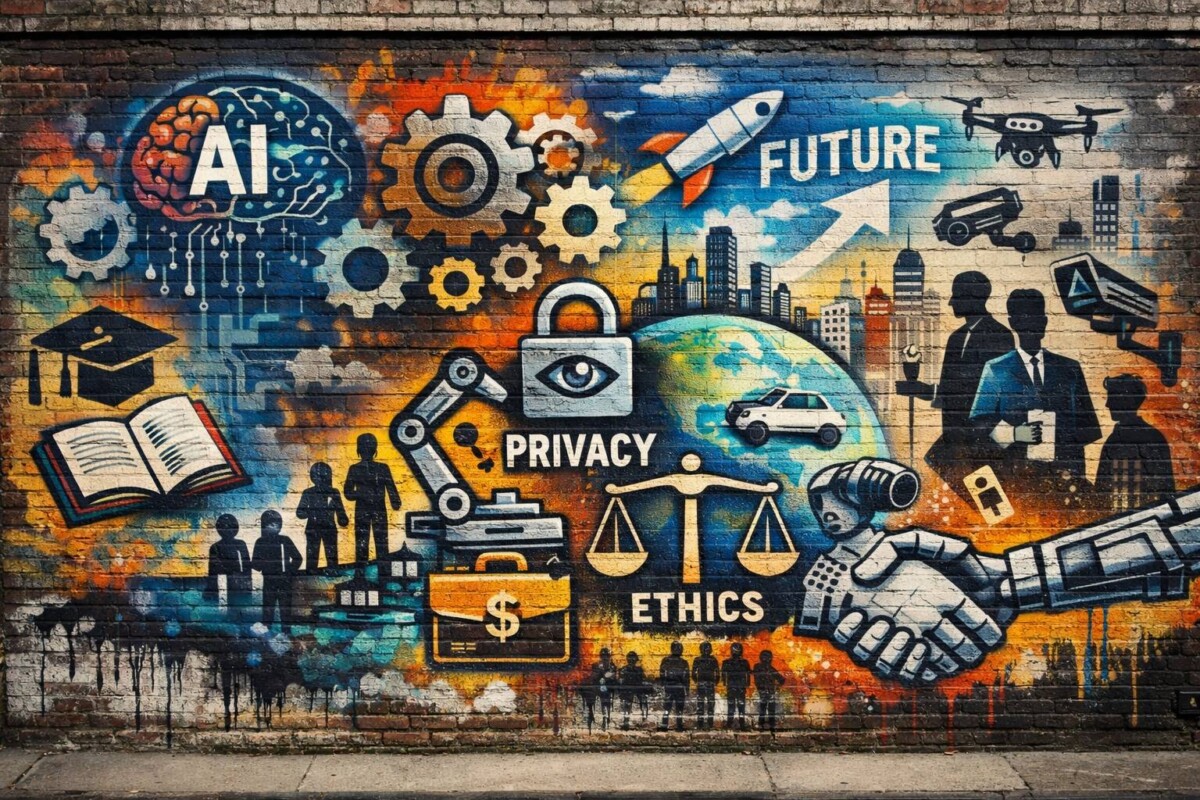
Artificial Intelligence (AI) has rapidly evolved from a futuristic concept into a powerful force reshaping every aspect of modern society. From healthcare and education to business and entertainment, AI applications are driving innovation, improving efficiency, and redefining how humans interact with technology. This article explores the profound impact of AI on society, highlighting both its advantages and challenges while offering a forward-looking perspective.
AI in Everyday Life
Artificial Intelligence has become deeply integrated into daily routines. Smart assistants, recommendation systems, and automated customer service tools are now standard features in digital platforms. AI helps users make decisions faster by analyzing vast amounts of data in real time. Whether it’s suggesting products, filtering emails, or navigating traffic, AI enhances convenience and efficiency.
Revolutionizing Healthcare
AI is transforming healthcare by improving diagnostics, treatment planning, and patient care. Machine learning algorithms can detect diseases such as cancer at early stages with higher accuracy than traditional methods. AI-powered tools also assist doctors in making data-driven decisions, reducing human error and improving outcomes. Telemedicine and AI chatbots further increase accessibility to healthcare services.
Impact on Employment and Jobs
One of the most debated aspects of AI is its effect on employment. While AI automates repetitive tasks and increases productivity, it also raises concerns about job displacement. However, AI is also creating new roles in data science, machine learning, and AI system management. The future workforce will require reskilling and adaptation to work alongside intelligent systems.
AI in Education
AI is revolutionizing education by offering personalized learning experiences. Intelligent tutoring systems adapt to students’ learning pace and style, helping improve academic performance. AI also assists educators in grading, content creation, and identifying students who need additional support, making education more efficient and inclusive.
Enhancing Business and Economy
Businesses leverage AI to optimize operations, enhance customer experiences, and increase profitability. From predictive analytics to automated marketing campaigns, AI enables companies to make smarter decisions. E-commerce platforms, for instance, use AI to recommend products based on user behavior, significantly boosting sales.
Ethical Concerns and Privacy Issues
Despite its benefits, AI raises serious ethical questions. Data privacy, surveillance, and algorithmic bias are major concerns. AI systems can unintentionally reinforce discrimination if trained on biased data. Ensuring transparency, accountability, and ethical use of AI is essential to maintain trust in these technologies.
AI in Security and Defense
AI plays a crucial role in enhancing security systems, from cybersecurity to national defense. It helps detect fraud, prevent cyberattacks, and monitor suspicious activities. However, the use of AI in military applications also raises concerns about autonomous weapons and global security risks.
Social Interaction and Human Behavior
AI is influencing how people interact with each other and technology. Social media algorithms shape opinions and behaviors by curating content. While AI enhances connectivity, it may also contribute to issues like misinformation, reduced human interaction, and digital dependency.
Environmental Impact of AI
AI contributes positively to environmental sustainability by optimizing energy usage, improving resource management, and supporting climate research. However, training large AI models requires significant computational power, which can increase energy consumption and carbon emissions.
Future Trends of AI in Society
The future of AI holds immense potential. Advancements in natural language processing, robotics, and automation will further integrate AI into society. Smart cities, autonomous vehicles, and advanced healthcare solutions will become more prevalent, reshaping how societies function.
Good to Know Statistics About Artificial Intelligence
- Over 80% of businesses are expected to adopt AI technologies in some form.
- AI could contribute up to $15.7 trillion to the global economy by 2030.
- Around 40% of jobs may be affected by AI automation in the coming decades.
- AI in healthcare is projected to grow by over 40% annually.
- More than 60% of internet users interact with AI daily without realizing it.
- AI-powered chatbots can handle up to 85% of customer service interactions.
- Global investment in AI exceeds hundreds of billions of dollars each year.
Most Frequently Asked Questions (FAQ) About AI and Society
1. What is Artificial Intelligence in simple terms?
Artificial Intelligence refers to machines or systems that can perform tasks that typically require human intelligence, such as learning, reasoning, and problem-solving.
2. Will AI replace human jobs completely?
AI will replace some repetitive jobs but also create new opportunities. The key is adapting and learning new skills relevant to AI-driven industries.
3. Is AI safe for society?
AI can be safe if developed and used responsibly. Ethical guidelines and regulations are essential to prevent misuse and ensure fairness.
4. How does AI affect privacy?
AI relies heavily on data, which raises concerns about data collection and privacy. Proper regulations and transparency are needed to protect users.
5. What industries benefit the most from AI?
Healthcare, finance, education, retail, and manufacturing are among the industries that benefit significantly from AI technologies.
Conclusion
Artificial Intelligence is undeniably transforming society at an unprecedented pace. Its applications offer remarkable benefits, from improving healthcare and education to enhancing business efficiency and daily convenience. However, these advancements come with challenges, including ethical concerns, job displacement, and privacy issues. The key to maximizing AI’s positive impact lies in responsible development, continuous learning, and global collaboration. As AI continues to evolve, societies must adapt strategically to harness its full potential while mitigating its risks.
