

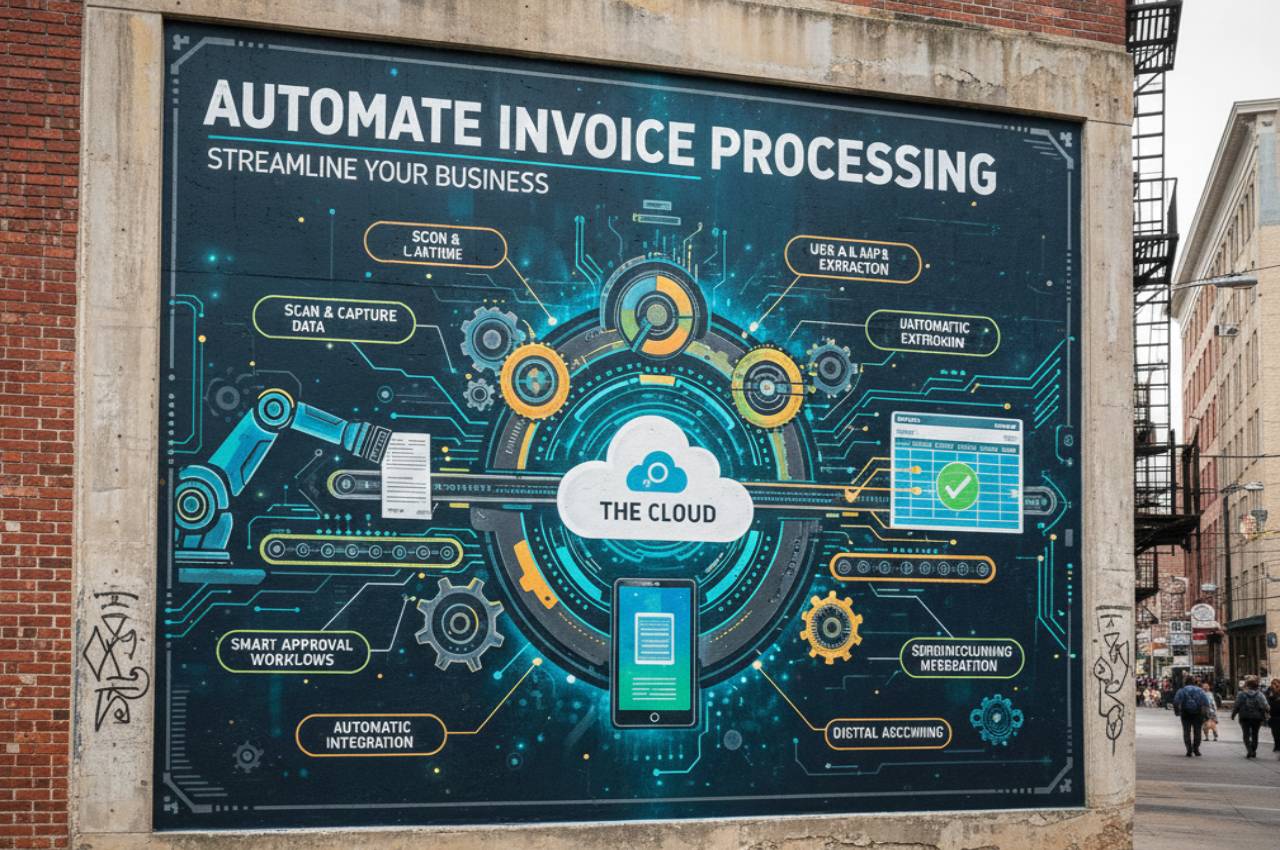
In the digital era, invoice processing is transforming from manual, error‑prone workflows into streamlined, intelligent operations powered by automation, AI, and advanced software. Businesses of all sizes are increasingly turning to automation to enhance accuracy, shorten payment cycles, reduce costs, and free finance teams to focus on strategy rather than repetitive tasks. This article explores the top tools used to automate invoice processing, how they work, why they matter, and what organizations must consider when adopting them.
Artificial Intelligence and Machine Learning
Artificial intelligence (AI) and machine learning (ML) are at the heart of modern invoice automation. These technologies enable systems to learn invoice formats and extract data accurately without rigid templates.
AI‑powered tools go beyond basic optical character recognition (OCR) by interpreting context — such as vendor names, invoice dates, totals, and line items — even from poorly formatted documents. Over time, these systems improve with use, reducing the need for manual corrections and exceptions. Many platforms can also validate the extracted data, flagging anomalies and automatically routing invoices based on business rules.
Intelligent OCR
Traditional OCR reads text; intelligent OCR understands it. Today’s intelligent OCR solutions harness deep learning to recognize fields from invoices regardless of layout or language, significantly reducing manual intervention.
Predictive Matching
Machine learning models can match invoices with purchase orders and contracts automatically. By learning from past approvals and discrepancies, predictive matching improves efficiency and reduces exception handling time.
Robotic Process Automation (RPA)
Robotic Process Automation (RPA) software bots mimic human actions on screens, enabling seamless integration with legacy systems. RPA tools can open emails, download attachments, read invoice fields, and enter data into enterprise resource planning (ERP) systems — activities that traditionally took hours of human effort.
With RPA, finance teams can automate repetitive tasks such as data entry, validation, and approval routing. They work well with rule‑based processes and can be combined with AI for even greater intelligence and flexibility.
Intelligent Automation
When RPA is coupled with AI technologies like NLP (Natural Language Processing), bots can automate more complex tasks — such as understanding unstructured invoices or managing exceptions, enabling tasks once considered too complicated for automation.
Workflow Orchestration
Modern RPA tools include workflow designers allowing finance leaders to design approval paths, exception flows, and escalation steps — ensuring compliance and policy adherence across invoice processing.
Cloud‑Based Invoice Platforms
Cloud invoice automation platforms provide scalable, secure environments for processing invoices online. These tools often include built‑in integrations with leading accounting systems, enabling real‑time visibility into invoice status, payment timelines, and cash flow forecasts.
Cloud solutions support mobile capture, where invoices received as paper or image files can be scanned via mobile devices and uploaded instantly, increasing accessibility and reducing processing time.
API Integrations
APIs allow invoice automation tools to communicate with ERPs, CRM systems, and procurement platforms — eliminating data silos and ensuring financial data is consistent across systems.
Multi‑Format Support
Modern platforms support multiple invoice formats — PDF, email attachments, scanned documents, and EDI — making them suitable for global operations with diverse suppliers.
Intelligent Document Processing (IDP)
Intelligent Document Processing (IDP) platforms merge various technologies — OCR, computer vision, machine learning, and NLP — to automatically extract, classify, and validate complex invoice data. IDP excels at handling unstructured data and can interpret nuanced information such as tax codes, line items, and handwritten details.
Self‑Learning Models
IDP systems can continuously learn from corrected data, reducing future errors and improving extraction quality without manual rule updates.
Exception Handling
When the system lacks confidence in a field extraction, IDP can route the document for human review, and then use that correction to improve future accuracy.
Workflow and Approval Systems
Dedicated workflow tools help companies design automated approval processes that reflect internal policies. These systems ensure that invoices are automatically routed to the right approvers, track response times, and send reminders — boosting compliance and reducing bottlenecks.
Audit Trails
Automated approval workflows create logs of all actions, which are essential for audit readiness and compliance reporting.
Conditional Logic
Finance teams can configure conditional rules — such as automatic approval up to a certain amount — significantly reducing manual approval load.
Financial Analytics and Dashboards
Tools with built‑in analytics provide insights into invoice lifecycle metrics such as cycle times, discount capture rates, error percentages, and vendor performance. Dashboards help finance leaders monitor performance and identify bottlenecks.
Real‑Time KPIs
Real‑time reporting on key performance indicators enables proactive decision‑making — helping teams anticipate problems before they become costly issues.
Predictive Insights
Some advanced platforms offer predictive analytics, forecasting cash flow impacts based on invoice approval trends and payment schedules.
Blockchain for Invoice Validation
Blockchain is emerging as a secure way to validate and authenticate invoices between trading partners. By maintaining tamper‑proof ledgers, blockchain reduces fraud risk and simplifies dispute resolution.
Smart Contracts
Smart contracts can automatically trigger payments once predefined conditions — such as delivery confirmation — are met.
Immutable Records
Immutable ledgers provide transparent records of every transaction, improving trust between buyers and sellers.
API and Integration Frameworks
Strong API frameworks allow invoice automation tools to plug into other business applications seamlessly. Whether it’s ERP, procurement systems, payroll, or CRM, integration frameworks ensure data flows smoothly across the ecosystem.
Low‑Code/No‑Code Connectors
Low‑code connectors reduce the technical burden on IT teams, enabling business users to configure integrations without deep programming skills.
Real‑Time Sync
Real‑time data synchronization ensures that updates in one system — such as a change in vendor terms — are immediately reflected across all connected tools.
Security and Compliance Tools
Given the sensitivity of financial information, automation tools must include robust security measures. Encryption, role‑based access, and compliance monitoring are essential.
Data Encryption
End‑to‑end encryption protects invoice data while in transit and at rest, safeguarding against breaches.
Regulation Adherence
Automated systems can enforce compliance with SOX, GDPR, and other regulations by embedding controls directly into workflows.
Statistics
Here are 7 accurate and up‑to‑date stats that highlight the impact of invoice automation across industries:
- Up to 80% cost reduction per invoice when switching from manual to automated processing. artsyltech.com
- Intelligent systems achieve 99% accuracy in extracting invoice data compared to much higher error rates with manual entry. Virtualworkforce.ai
- Only 7% of accounts payable processes currently utilize AI, though 40% plan adoption soon. Kefron
- 60–80% touchless invoice processing rates are now common among top performers. parseur.com
- Manual processing still consumes 14–15 days per invoice on average, automated tools reduce this to 1–3 days. artsyltech.com
- 74% of AP teams are partially automated, up from 62% in 2023, showing rapid adoption. Kefron
- AI invoice automation reduces processing time by 93% in real implementations. SUPALABS
Real Study Case
A UK energy distribution company implemented AI‑powered invoice automation to process over 500,000 invoices annually. After deployment, processing speed increased by 93%, data extraction accuracy exceeded 99%, and manual data entry dropped by 85% dramatically cutting labor costs and error resolution time. SUPALABS
This case illustrates how real organizations leverage automation — blending AI, OCR, and workflows — to transform finance operations into strategic assets rather than back‑office chores.
Most Common Mistakes in Invoice Automation
- Rushing implementation without strategy: Without clear KPIs and phased rollouts, automation can fail to deliver expected ROI.
- Ignoring data quality: Poor vendor master data leads to extraction errors and exceptions.
- Underestimating change management: Teams often resist new tools; lack of training slows adoption.
- Choosing tools that don’t integrate: Silos between automation tools and ERPs kill efficiency gains.
- Neglecting security: Skimping on permissions, encryption, or compliance features risks data breaches.
FAQs About Invoice Automation
What types of invoices can be automated?
Modern systems can process PDFs, scanned documents, email attachments, EDI files, and mobile captures with high accuracy.
Can small businesses benefit from automation?
Yes — cloud‑based, low‑cost tools provide automation even for low volumes, delivering faster ROI.
Does automation eliminate all human roles?
No — automation removes repetitive tasks but humans remain essential for exception handling and strategy.
How long does it take to see ROI?
Most organizations see ROI within 3–9 months depending on volume and tool integration. parseur.com
Do automation tools require technical expertise to manage?
Many tools now offer low‑code interfaces, but initial setup and integration with ERP software may require IT support.
Conclusion
Automating invoice processing is no longer a futuristic ideal — it’s a competitive necessity. By leveraging AI, machine learning, RPA, and intelligent document processing, businesses dramatically reduce costs, improve accuracy, accelerate payment cycles, and elevate their finance teams from administrative work to strategic impact. Whether you’re a startup or a multinational, the right combination of automation tools can unlock significant operational efficiency and financial insight for your organization.
