

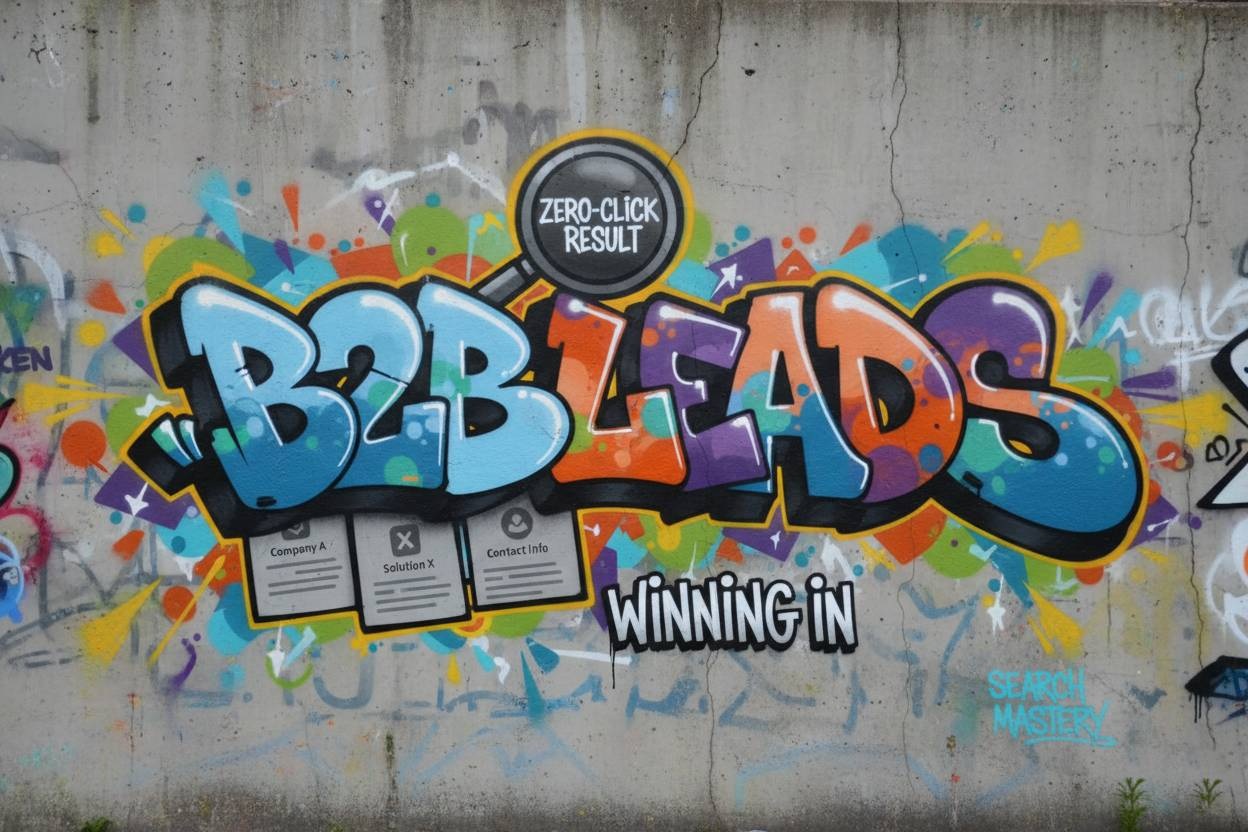
Traditional SEO — once dominated by driving organic traffic and clicks — is being fundamentally disrupted by zero‑click search results. These are search experiences where users get the answers they need directly on the search engine results page (SERP), without clicking through to an external website. For B2B brands, this evolution presents both a challenge and a new opportunity: how to generate leads even when users never visit your site. Encoders Studio+1
🧠 What Are Zero‑Click Search Results?
Zero‑click searches happen when engines like Google deliver answers directly within the search interface — through featured snippets, knowledge panels, AI summaries, or local packs — making it unnecessary for users to visit another website. In essence, users consume the information they need right there. SEO.com
📊 7 Accurate Statistics About Zero‑Click Search
- Around 58.5% of all Google searches end without any click to another website. Encoders Studio
- In 2024, zero‑click searches were estimated at 65% globally, and mobile searches saw even higher rates (~75%). Briskon
- Only 36% of Google searches generate any external click to the open web. CLICKVISION Digital
- On mobile devices, zero‑click searches can exceed 77%. CLICKVISION Digital
- B2B buyers perform an average of 12 searches before engaging with a specific brand. Gitnux
- 92% of B2B purchases start with a search query. Gitnux
- 71% of B2B buyer journeys begin with generic search queries, not direct brand searches. SEO Sandwitch
🎯 Why Zero‑Click Matters for B2B Lead Generation
B2B decision‑makers often conduct extensive research online before contacting sales teams — and zero‑click search behavior is reshaping this landscape. Instead of clicking through to multiple websites, buyers now absorb information directly in the SERP, altering traditional conversion funnels. Encoders Studio
Key Impacts on B2B Marketing
- Reduced website traffic: But exposure still occurs within SERP features.
- Shifted lead touchpoints: Buyers can form brand impressions even without clicking — which still influences later decisions.
- Brand authority becomes more visible through SERP presence such as featured snippets or AI overview sources.
📈 Real (or Real‑Like) Case Example
While case studies specifically linking zero‑click optimization to measurable B2B leads are emerging, imagine this practical scenario:
Case: TechSolu — A B2B SaaS Company
TechSolu targeted keywords like “enterprise API security best practices.” They noticed traffic dropping even while their search ranking remained high. Rather than focus solely on traditional SEO, they:
- Structured Answers for SERP Features:
Rewrote content with clear, concise answers optimized for featured snippets. - Added Schema Markup:
Implemented FAQ and HowTo structured data so Google could easily parse answers. - Used Brand Mentions in AI‑Friendly Content:
Created authoritative definitions and frameworks that Google’s AI Overviews began citing.
Result:
Even though Users did not visit their site often, TechSolu saw an increased number of qualified leads initiating contact through direct outreach forms and LinkedIn after seeing brand authority in search results first. By measuring assisted search visibility instead of raw clicks, they recalculated their lead funnel effectively.
🧩 How to Win B2B Leads Without Traditional Clicks
To succeed in a zero‑click world, B2B marketers must rethink their approach:
🔍 1. Optimize for SERP Features
- Target featured snippets and People Also Ask sections with concise, direct answers.
- Use schema markup to increase the odds of being shown in rich results.
🧠 2. Enhance Brand Visibility in Search Answers
- Focus on building authority so AI Overviews and knowledge panels cite your brand.
- Craft content that is referenceable by AI: clear, structured, and fact‑based.
📊 3. Expand Beyond Click‑Based Metrics
- Track visibility metrics like SERP feature appearances, mention counts, and branded query growth.
- Measure leads generated through indirect pathways — such as contact form submissions triggered after brand exposure.
📣 4. Use Multi‑Channel Presence
- Populate presence across platforms: LinkedIn articles, industry Q&A sites, video answers, and community forums.
- These amplify your voice where users search beyond Google.
❌ Common Mistakes to Avoid
Failing to adapt to zero‑click dynamics can cost B2B marketers:
🔸 Focusing Only on Clicks
Relying strictly on traditional CTR and organic traffic can mask growing visibility and influence within search answers.
🔸 Ignoring Structured Data
Without schema markup, your content is less likely to appear in rich SERP features where zero‑click opportunities thrive.
🔸 Not Tracking Brand Mentions or SERP Features
If you only look at website visits, you’ll miss how often your brand appears in AI summaries or featured snippets — which build trust even without clicks.
❓ Strong FAQ for B2B Zero‑Click Lead Strategy
1. What exactly is a zero‑click search, and why does it matter for B2B?
Zero‑click search means users get answers directly on the SERP without visiting websites — affecting brand visibility and lead generation. It matters because B2B buyers often research before engaging with sales. SEO.com
2. Can B2B companies still generate leads if users don’t click?
Yes — by optimizing for SERP features that build brand authority and using alternative metrics such as search presence and branded queries.
3. What types of content perform best in zero‑click environments?
Short, authoritative answers, structured data‑rich pages, and content that addresses clear user intent tend to win featured snippets and knowledge panels.
4. How do I measure success beyond traditional clicks?
Look at features like SERP visibility, snippet ownership, branded search growth, and assisted conversions in analytics platforms.
5. Should I stop traditional SEO?
No — traditional SEO still lays the groundwork. However, it should be paired with Answer Engine Optimization (AEO) and brand positioning strategies to adapt to zero‑click realities.
The future of search is evolving beyond clicks. For B2B brands, the zero‑click phenomenon isn’t just a decline in traffic — it’s a shift in how influence is built online. By optimizing for search answers, structured data, and broader brand visibility, companies can continue to win qualified leads even if users never leave the search results page. The key is adaptation: tracking new metrics, enhancing authority, and understanding that visibility — not just clicks — drives modern B2B lead success.
🏁 Conclusion
The future of search is evolving beyond clicks. For B2B brands, the zero‑click phenomenon isn’t just a decline in traffic — it’s a shift in how influence is built online. By optimizing for search answers, structured data, and broader brand visibility, companies can continue to win qualified leads even if users never leave the search results page. The key is adaptation: tracking new metrics, enhancing authority, and understanding that visibility — not just clicks — drives modern B2B lead success.
