

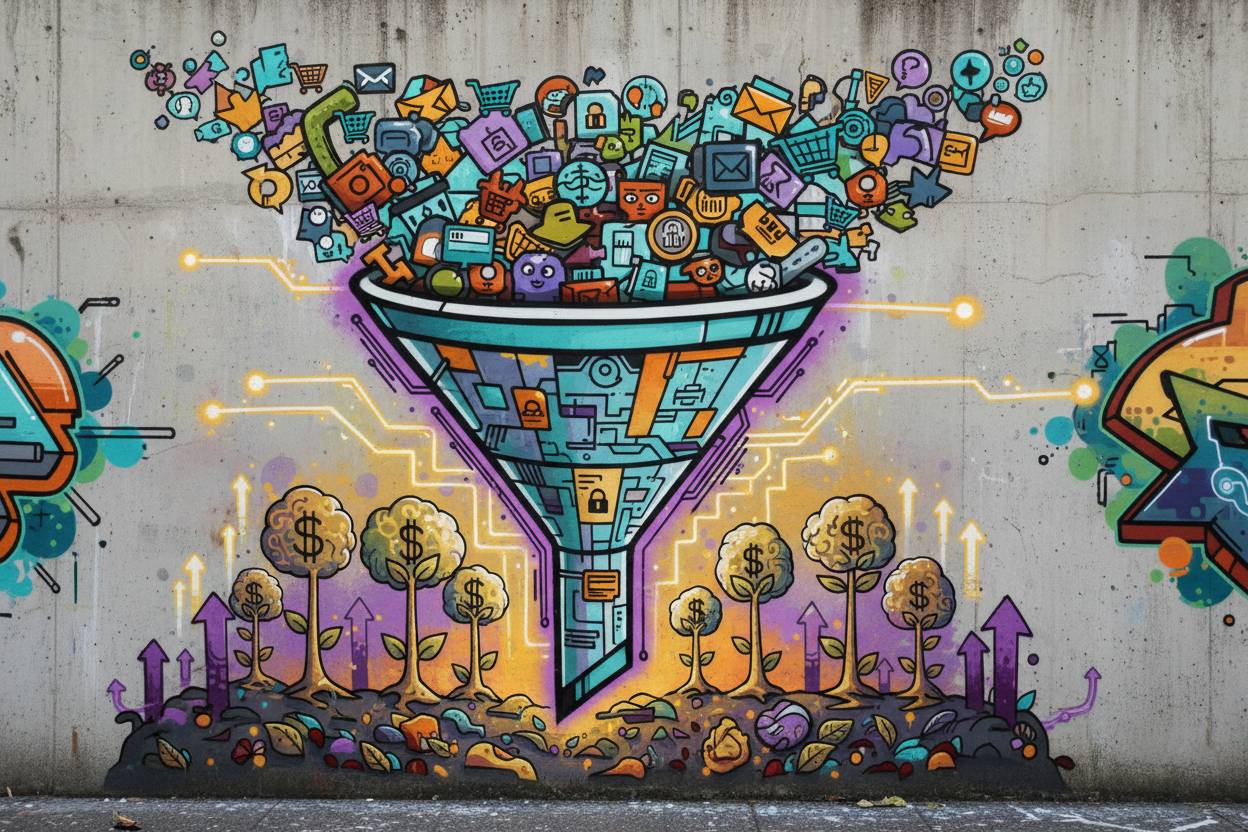
Building effective e-commerce funnels is crucial for sustainable growth. A well-structured funnel guides visitors through the buying journey, turning casual browsers into loyal customers. Businesses that focus on funnel optimization see higher conversion rates, increased revenue, and stronger brand loyalty. By analyzing user behavior, leveraging automation, and testing continuously, companies can create funnels that perform over time. With competition intensifying in e-commerce, mastering funnel strategies is no longer optional—it’s essential.
Understanding the E-commerce Funnel
The e-commerce funnel is a step-by-step process that turns website visitors into paying customers. Each stage of the funnel requires a different marketing approach to maximize conversions.
Awareness Stage
This is where potential customers first encounter your brand. Marketing efforts should focus on reaching new audiences and educating them about your products.
- Use social media ads targeting niche audiences
- Invest in search engine optimization (SEO) to drive organic traffic
- Implement influencer marketing for brand visibility
Consideration Stage
Here, users are evaluating options and comparing products. The goal is to nurture leads with compelling content and offers.
- Offer free trials or demos to increase engagement
- Utilize email marketing to provide personalized recommendations
- Include reviews and testimonials to build trust
Optimizing Landing Pages
Landing pages are the backbone of e-commerce funnels. A high-converting landing page addresses user intent and motivates action.
Design for Conversion
The layout and design should guide the user toward completing the desired action.
- Use clear and concise headlines
- Implement visually appealing call-to-action buttons
- Optimize loading speed to prevent drop-offs
Personalization
Tailoring landing pages to user segments increases engagement and sales.
- Show product recommendations based on browsing history
- Use dynamic content to match user preferences
- Implement geo-targeting for local promotions
Email Marketing Automation
Email automation nurtures leads efficiently while maintaining engagement with minimal manual effort.
Segmentation Strategies
Segmenting your audience ensures relevant messages are sent to the right users.
- Group by purchase behavior, location, or engagement level
- Send targeted offers and reminders for abandoned carts
- Track open and click-through rates for continuous improvement
Drip Campaigns
Drip campaigns deliver timely content to guide prospects through the funnel.
- Welcome series for new subscribers
- Product recommendation campaigns based on user activity
- Re-engagement campaigns for inactive customers
Social Proof and Reviews
Social proof can dramatically increase conversions by establishing credibility and trust.
Customer Testimonials
Displaying positive customer feedback reassures potential buyers.
- Include authentic quotes with customer photos
- Highlight results or benefits from product usage
- Encourage reviews on external platforms like Google or Trustpilot
User-Generated Content
Encourage customers to share experiences to boost social engagement.
- Create contests for photo submissions
- Feature user content on social media and websites
- Share stories of long-term customer success
Retargeting Strategies
Retargeting allows brands to re-engage users who have shown interest but didn’t convert.
Dynamic Ads
Ads should reflect the user’s browsing behavior for higher relevance.
- Show recently viewed products
- Offer time-limited discounts to create urgency
- Utilize multi-channel retargeting (social media + email)
Segmentation in Retargeting
Segment retargeting campaigns based on user intent and funnel stage.
- Separate cart abandoners from window shoppers
- Adjust messaging according to previous interactions
- Monitor performance to reduce wasted ad spend
Analytics and Funnel Tracking
Measuring performance is critical for optimizing the funnel and improving ROI.
Key Metrics
Track metrics that indicate user behavior and conversion efficiency.
- Conversion rate by funnel stage
- Bounce rate and average session duration
- Customer acquisition cost vs. lifetime value
A/B Testing
Regular testing identifies the most effective strategies and removes bottlenecks.
- Test different headlines, images, and CTAs
- Optimize forms and checkout flows
- Monitor impact on revenue and engagement
Case Study Example
A mid-sized online apparel retailer implemented a full-funnel optimization strategy:
- Improved landing page design and personalization
- Introduced segmented email drip campaigns
- Used dynamic retargeting ads
Result: a 35% increase in conversions and a 50% growth in repeat customers within six months.
Common Mistakes in Funnel Building
Even experienced marketers can make errors that reduce funnel performance.
- Overcomplicating the funnel with too many steps
- Neglecting mobile optimization for landing pages
- Sending generic emails instead of segmented campaigns
- Ignoring data analysis and performance metrics
FAQs
What is the average conversion rate for e-commerce funnels?
Most e-commerce sites convert at around 2–5%, but optimized funnels can reach 10–12%.
How often should I test my funnel?
Continuous testing is recommended, with major updates every 1–2 months.
Can social media alone drive e-commerce conversions?
Social media can generate awareness, but integrated funnels with email and retargeting are far more effective.
What is the biggest factor in funnel success?
Personalization and data-driven decisions consistently outperform generic strategies.
How do I calculate ROI for funnel campaigns?
Compare total revenue generated by the funnel to marketing and operational costs.
Statistics
- Businesses using optimized funnels see a 20–30% higher conversion rate.
- Personalized email campaigns can increase revenue by up to 760%.
- 80% of consumers trust online reviews as much as personal recommendations.
- Retargeting ads can increase conversion rates by 70%.
- Companies that implement A/B testing improve overall funnel performance by 25%.
- Mobile-friendly landing pages reduce bounce rates by 67%.
- Average cart abandonment rate in e-commerce is 69.57%, highlighting the need for retargeting.
Conclusion
Building profitable e-commerce funnels requires strategy, continuous testing, and personalization. Companies that optimize each stage of the funnel—from awareness to post-purchase engagement—can achieve long-term growth and customer loyalty. Avoid common mistakes like neglecting mobile users or ignoring analytics, and focus on creating a seamless experience for your audience. With data-driven decisions, automated email nurturing, and targeted retargeting, your e-commerce business can thrive in a competitive landscape.
